Research

Projects

Research projects under way and recent ones: from the sensory memory of the Spanish Quarters in Naples to the polyrhythms of the Caribbean, the culture of hospitality in the Mediterranean and the rhythms of the city.


Spanish Quarters Memory

Digital remediation of cultural heritage in Naples’ Quartieri Spagnoli through body memory, soundwalking and a web data space, developed with the Suor Orsola Benincasa University (2026).

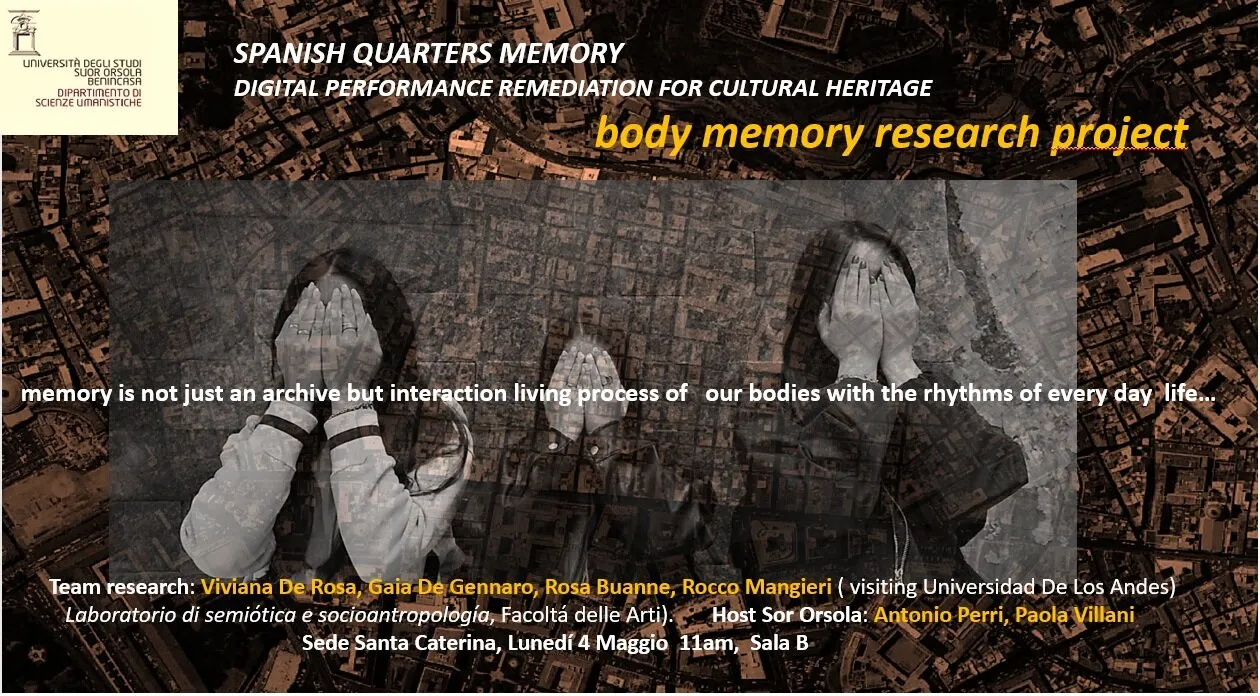
Poster with a translucent black-and-white photo of three people covering their faces with their hands, overlaid on a sepia aerial map of the city grid; university logo at top left.

Spanish Quarters Memory: Body Memory Research Project

Suor Orsola Benincasa University, Department of Humanities, Santa Caterina campus, Room B (Naples)

Presentation of the body memory strand of Spanish Quarters Memory (digital performance remediation for cultural heritage), built on the idea that memory is not just an archive but a living process of interaction between our bodies and the rhythms of everyday life. Research team: Viviana De Rosa, Gaia De Gennaro, Rosa Buanne and Rocco Mangieri; hosts at Sor Orsola: Antonio Perri and Paola Villani; Monday 4 May, 11 am.
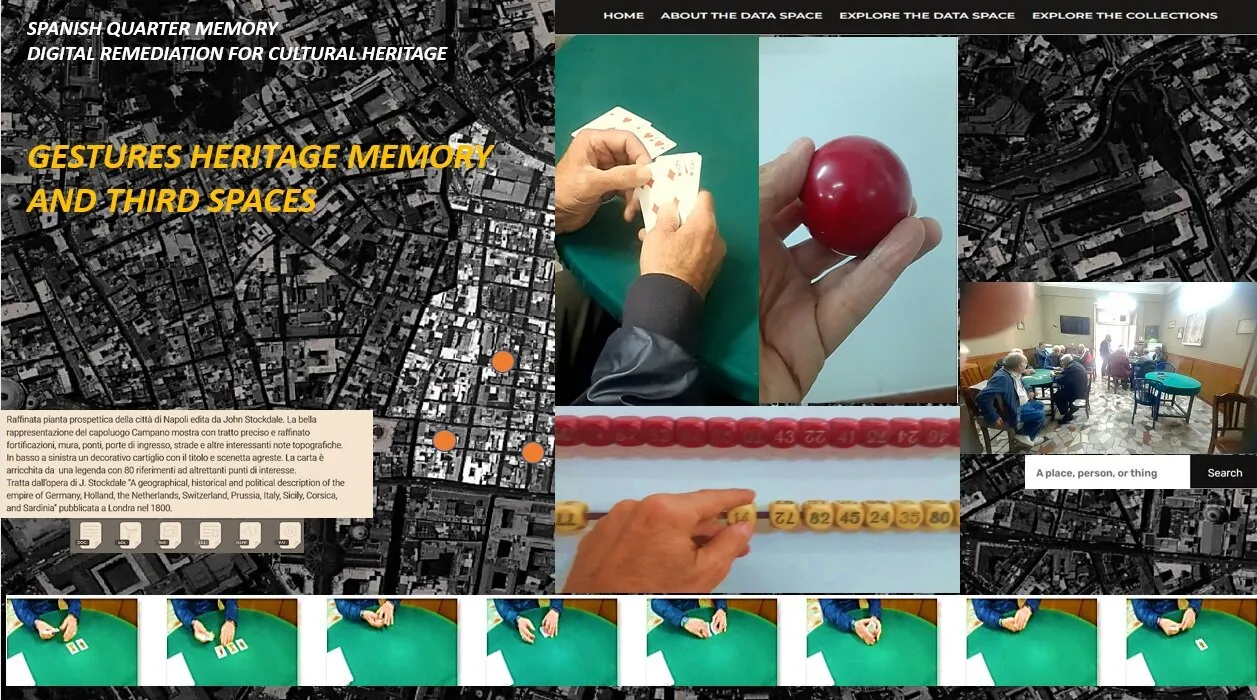
Collage screenshot: a dark aerial map of the city with orange markers and a map caption, photos of hands playing cards and handling a red ball and a numbered counting rack, a room with men at green card tables, and a strip of frames of card play; the yellow title reads “Gestures heritage memory and third spaces”.

Spanish Quarters Memory: Gestures, Heritage, Memory and Third Spaces

Università degli Studi Suor Orsola Benincasa, Department of Humanities (Naples)

Screen from the project’s digital data space on gestures, heritage memory and third spaces: frame sequences of hands playing cards and handling game pieces, a photograph of a room with card tables and an old map of Naples with marked points. The interface offers Home, About the data space, Explore the data space and Explore the collections, plus a search box.

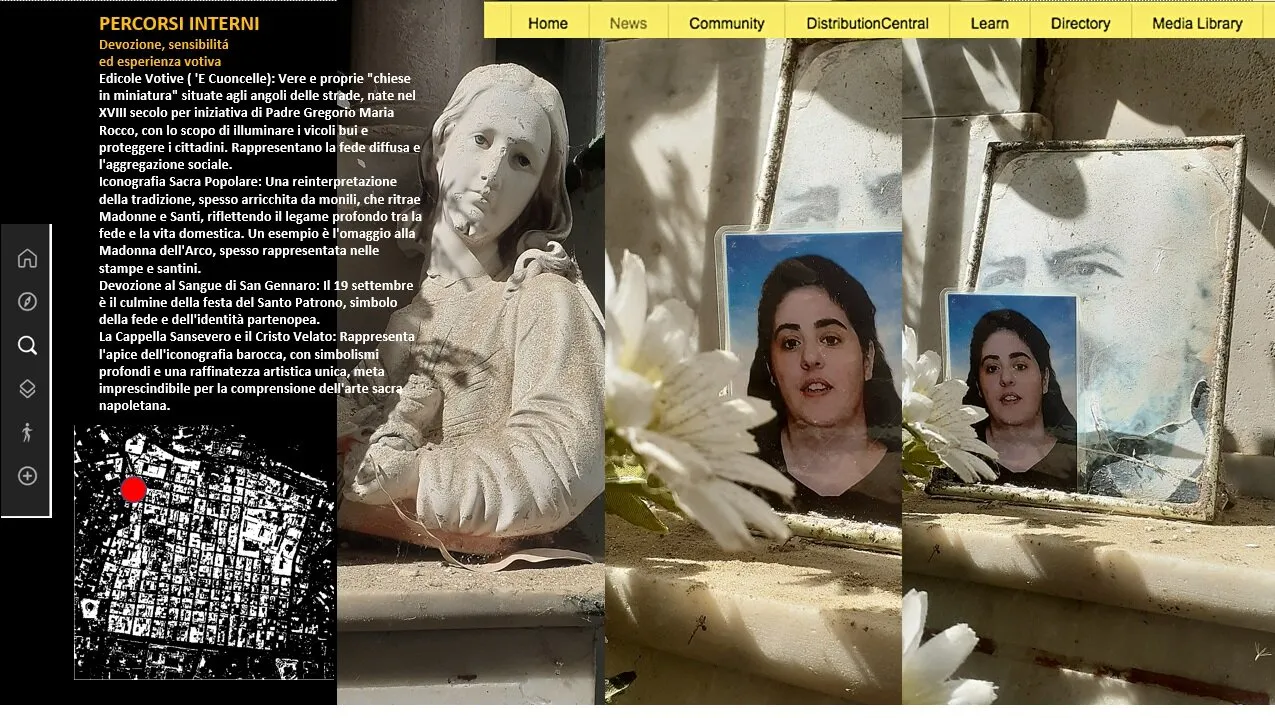
Dark screenshot with an orange heading and a block of Italian text on the left, a small black-and-white map with a red dot, and photographs of a plaster Madonna bust and framed portraits among white flowers; a yellow navigation bar runs across the top.

Spanish Quarters Memory: Inner Paths – Devotion, Sensibility and Votive Experience

Università degli Studi Suor Orsola Benincasa, Department of Humanities (Naples)

Screen from the project’s digital platform on devotional heritage in Naples: street votive shrines (the “’E Cuoncelle”, miniature churches born in the 18th century), popular sacred iconography, the devotion to the Blood of San Gennaro and the Sansevero Chapel with the Veiled Christ. The text is illustrated with photographs of a weathered Madonna statue and framed portraits left at a shrine.

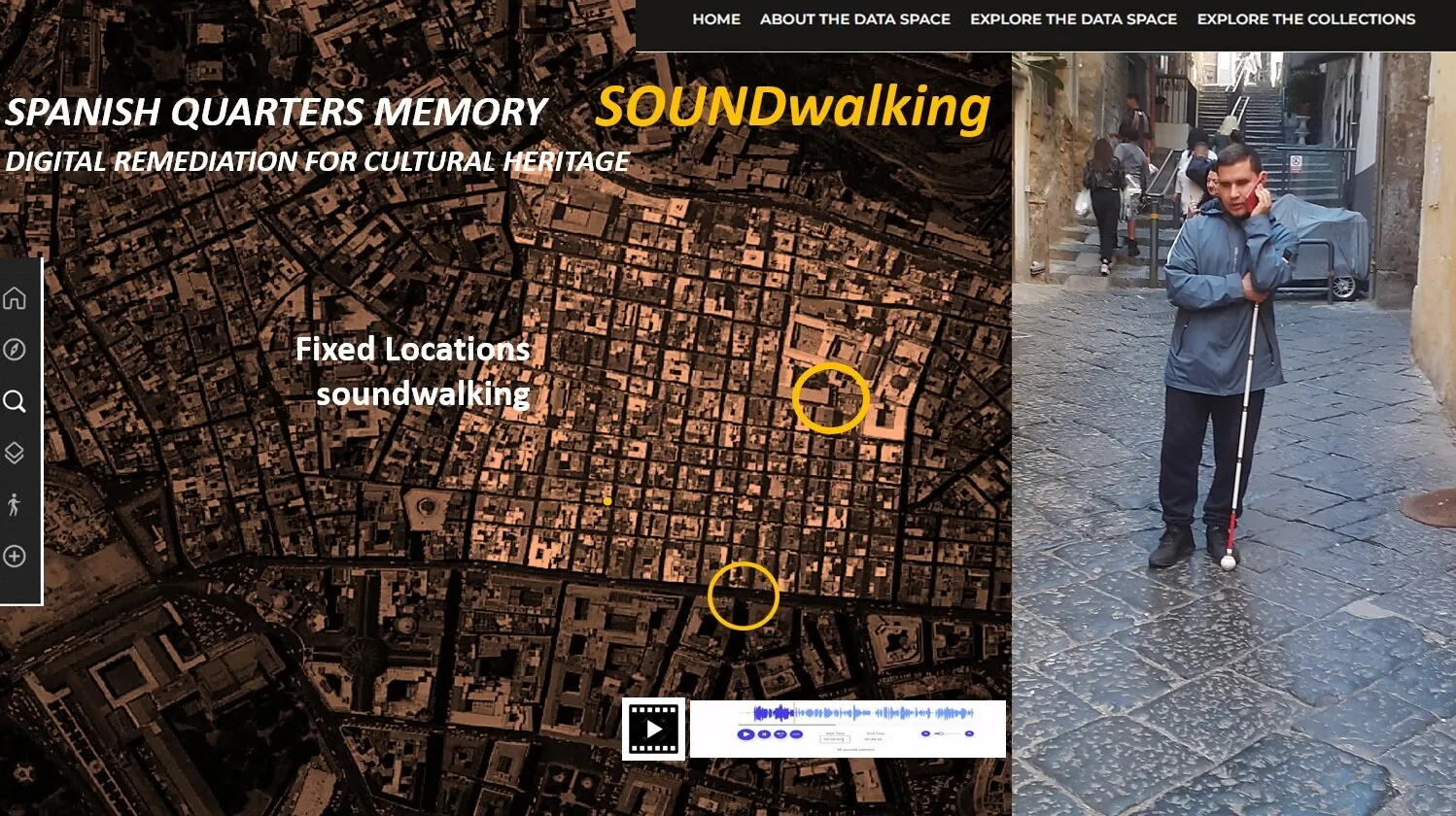
Web interface over a sepia aerial map of the Spanish Quarters with two circled fixed locations and an audio waveform player, beside a photo of a man with a white cane on the phone in a stepped cobbled alley.

Spanish Quarters Memory: SOUNDwalking

Spanish Quarters, Naples

The soundwalking strand of Spanish Quarters Memory, a project on digital remediation for cultural heritage. A web “data space” maps fixed soundwalking locations across the district and links them to audio and video material.

Event, atmosphere and collective making

Semiotic research on the event, on architectural atmospheres in the age of AI and on collective semiosis.

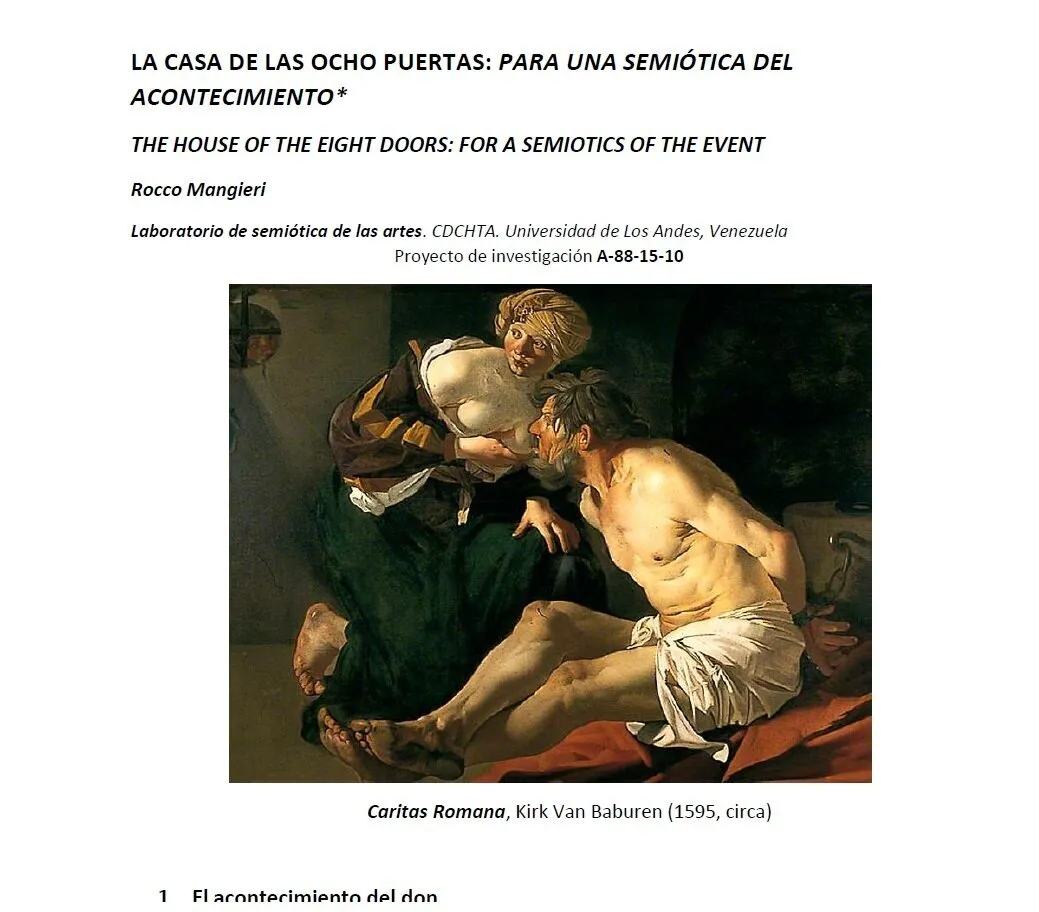
Baroque painting Caritas Romana by Van Baburen: a young woman in a turban offers her breast to an old, bound, half-naked man seated on the floor.

The House of the Eight Doors: For a Semiotics of the Event

Semiotics of the Arts Lab, CDCHTA, Universidad de Los Andes, Venezuela

A semiotics paper on the event, produced within research project A-88-15-10 at the Laboratory of Semiotics of the Arts of the Universidad de Los Andes. Illustrated with the painting Caritas Romana, its first section opens on the event of the gift.

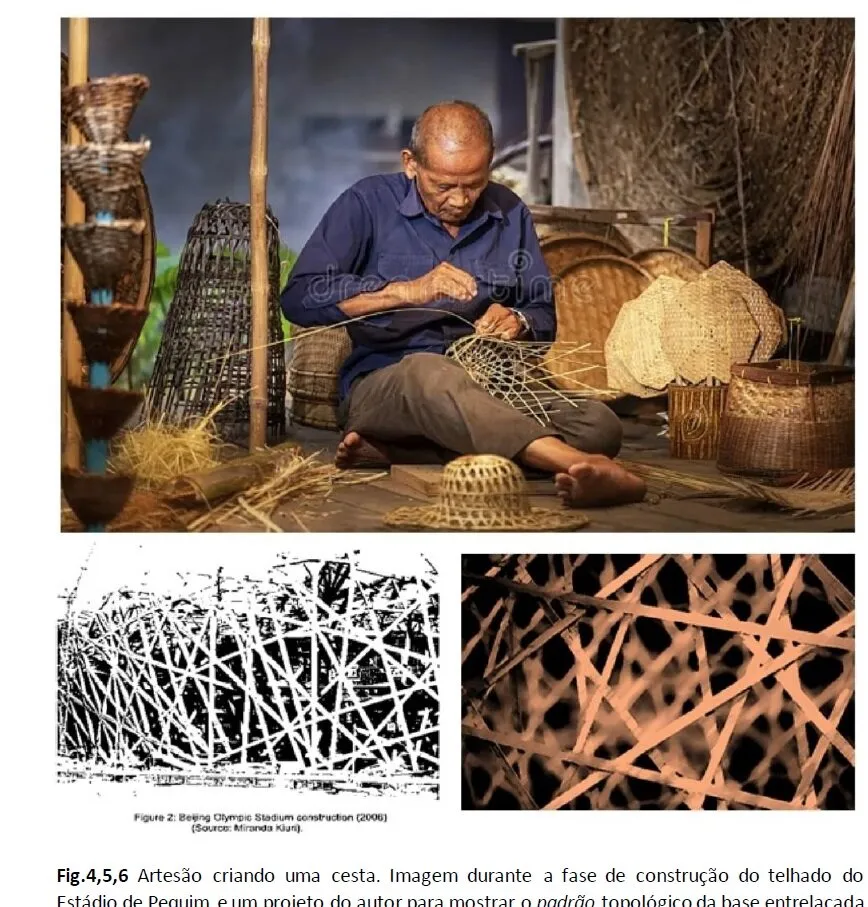
An elderly man weaving a basket among wicker objects, above a black-and-white image of the Beijing stadium's interlaced steel roof and a close-up of a woven pattern in orange tones.

Biomimetic Architectural Atmospheres: AI as an Agent Producing Meaning in Expanded and Shared Design Environments

Semiotics and Socioanthropology Lab, Faculty of Arts, Universidad de Los Andes

A paper on Herzog & de Meuron's Beijing Olympic main stadium (2003–2008) and the hybrid human and non-human, AI-mediated assemblages that produce meaning in design. This page links the interlaced roof structure to basket weaving, with the author's study of the woven topological pattern.

Neon-yellow banner with the stencilled title “La caja semiótica”, a large red “WORK IN PROGRESS” stamp and the line “semiosis de creación colectiva”, under the El Signo inVISIBLE website menu.

La caja semiótica [semiosis of collective creation]: work in progress

El Signo inVISIBLE (ISSN-E 2954-4726)

A collective-creation project on the semiosis of group making, presented as a work in progress on the El Signo inVISIBLE website, whose menu lists journals, categories and projects.

Rhythm and hospitality

The rhythms of the city seen while walking, and the hospitality practices of the Mediterranean.

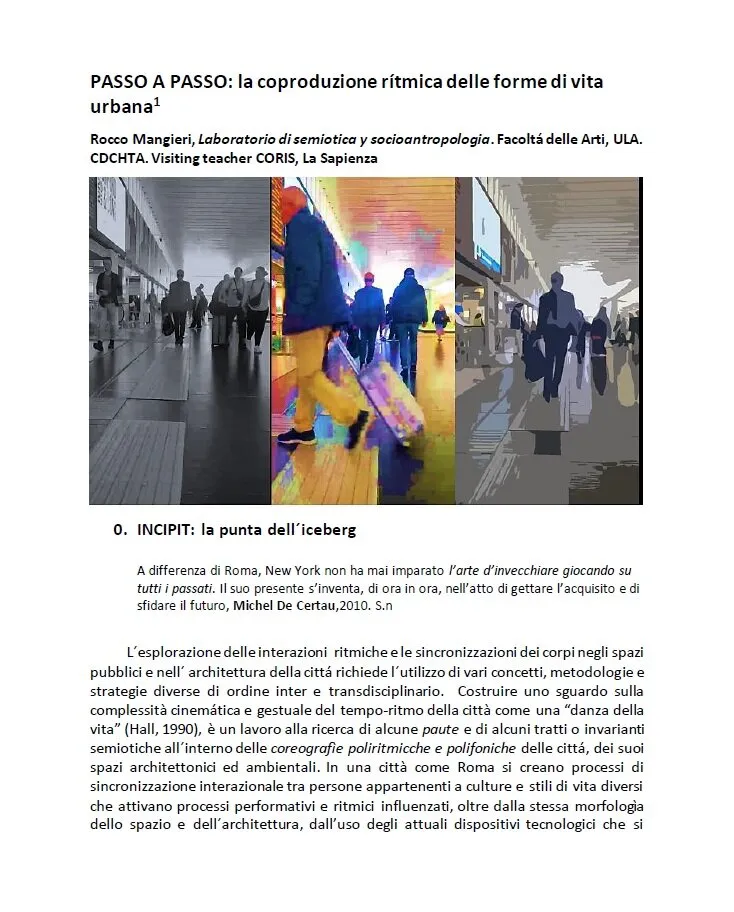
Triptych of people walking through a station concourse with luggage, rendered in greyscale, in saturated colours and in a flat posterised style.

Step by Step: The Rhythmic Co-production of Urban Forms of Life

Semiotics and Socioanthropology Lab, Faculty of Arts, ULA (CDCHTA); visiting teacher at CORIS, Sapienza University of Rome

A study of the rhythmic interactions and synchronisation of bodies in public space and city architecture, seeking semiotic invariants in the poly-rhythmic, polyphonic choreographies of a city like Rome. It reads urban life as a “dance of life” shaped by space, culture and today's technological devices.

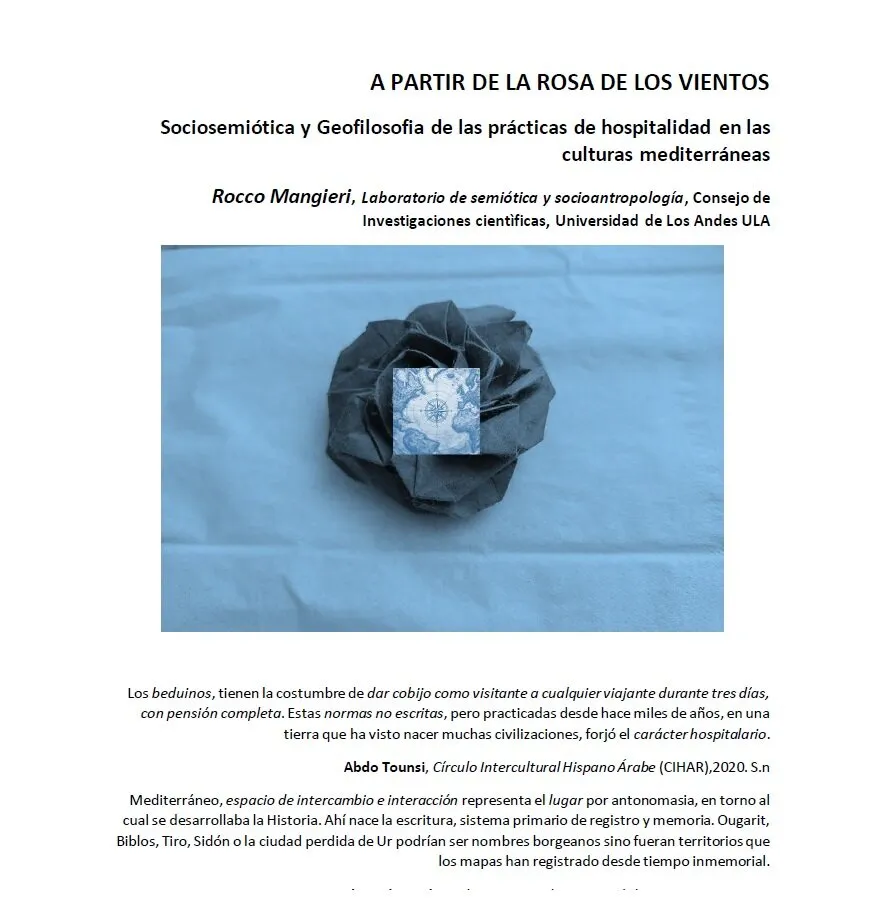
Blue-tinted paper-folded rose with a small square of an old map and compass rose at its centre.

Starting from the Wind Rose: Sociosemiotics and Geophilosophy of Hospitality Practices in Mediterranean Cultures

Semiotics and Socioanthropology Lab, Scientific Research Council, Universidad de Los Andes (ULA)

A study of hospitality practices in Mediterranean cultures from the perspectives of sociosemiotics and geophilosophy. It opens with the Bedouin custom of sheltering any traveller for three days and with the Mediterranean as a space of exchange and interaction where writing and history began.