Sensorium
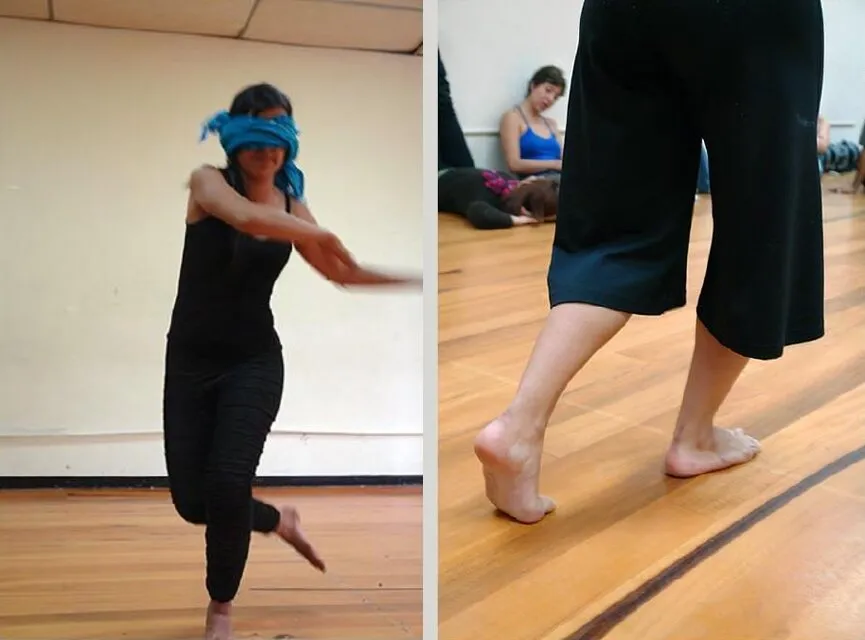
Sensorium, theatre-anthropology workshop, 2009–2011: training based on the principles of Barba and Fuenmayor and on my own theory of bodily training.
Dance · Theatre · Performance · Music
Some twenty years of workshops, teaching and research in what he calls the performing arts — theatre, dance, performance and music — selected from his Performing Arts dossier.
Performing Arts dossier PDF · 61 pages, in Italian
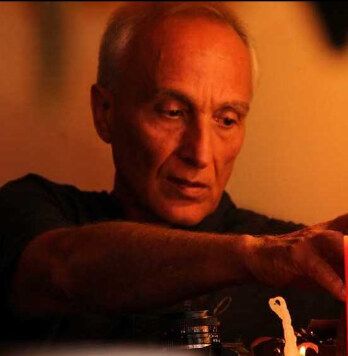
Architect, musician and semiotician, trained at DAMS (University of Bologna) and professor at the Universidad de los Andes, he has attended stages and seminars at the International Centre of Semiotics and Linguistics of the University of Urbino. He holds a PhD in Philology and Semiotics (University of Murcia, Spain) and pursued postgraduate studies in social sciences at the Central University of Venezuela. He studied theatre and dance anthropology at the Odin Teatret laboratory with Eugenio Barba and Julia Varley.
Director of the Laboratory of Semiotics and Socio-anthropology at the Faculty of Arts of the Universidad de los Andes (Venezuela), he has been a visiting professor at the Universidad Nacional de las Artes (Argentina), the Master in Arts Vivants of the Université Libre de Bruxelles, the Faculty of Arts of the Universidad Nacional de Colombia, the University of Modena and Reggio Emilia, the Universidad Autónoma del Estado de Morelos (Mexico) and Movimento Centrale, a centre for dance and performing arts (Rimini, Italy). He currently coordinates a research project on intermedial environments in the arts of the body and performance, and is conducting research on the rhythm of the city as visiting professor at Sapienza University of Rome.
Original text in Italian.
This selection gathers about twenty years of workshop practice, teaching and research in what I call the field of the Performing Arts (theatre, dance, performance and musical practices). The order is not strictly chronological but arranged around the aspects I wished to bring to the fore across the body of work.
My most recent research and creations, while integrating the fundamental traits of my earlier professional and artistic training, have largely focused on the concept of atmosphere and environment (proprioceptive and exteroceptive), with particular attention to the acousmatic dimension of the perception and generation of movement and action. This framework is what I first called ecoperformance and bioperformance.
The approach is transdisciplinary, but corporeality remains the integrating axis of all the other elements. In this sense, what we call corporeality goes well beyond the somatic dimension: it includes the sphere of sensibility, of desire and, above all, of memory — the memory of the body.
Alongside these explorations stands the theme of rhythm, to which I devoted the field research carried out in Rome in 2025 as a visiting researcher at the Department of Sociology of Communication of Sapienza. I consider the category of rhythm a transdisciplinary and articulating order of almost all cultural practices, especially those regarded as artistic; in this sense I have even returned, metaphorically, to the “ancient glottology of the body”.
The “spatio-temporal unit” has been walking (Michel de Certeau’s primordial walking), a semiotic magnitude shared by the researcher and the field of study and, finally, a silent and probably safer territory from which to elaborate progressive working hypotheses. The link with dance and musicology is unavoidable if we are to perceive, and dare to frame, the polyrhythmic dimension of a city like Rome.
Training workshops based on the principles of Eugenio Barba and Victor Fuenmayor and on my own theory of bodily training, with no substantial difference between actor, performer and dancer. Shared workshops between Venezuela and Belgium, within the Master in Arts Vivants ULB-ULA, 2005–2011.
Sensorium, theatre-anthropology workshop, 2009–2011: training based on the principles of Barba and Fuenmayor and on my own theory of bodily training.
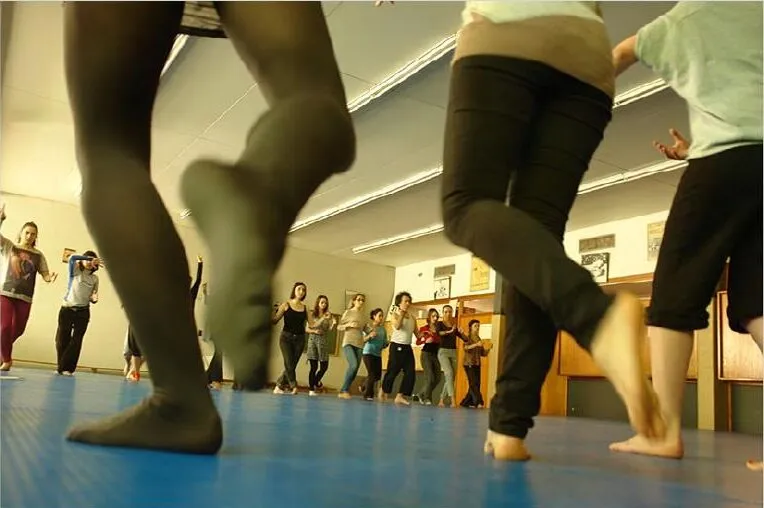
Workshop of percussion for dance and theatre at the Odin festival, Denmark, 2011: training with no substantial difference between actor, performer and dancer.
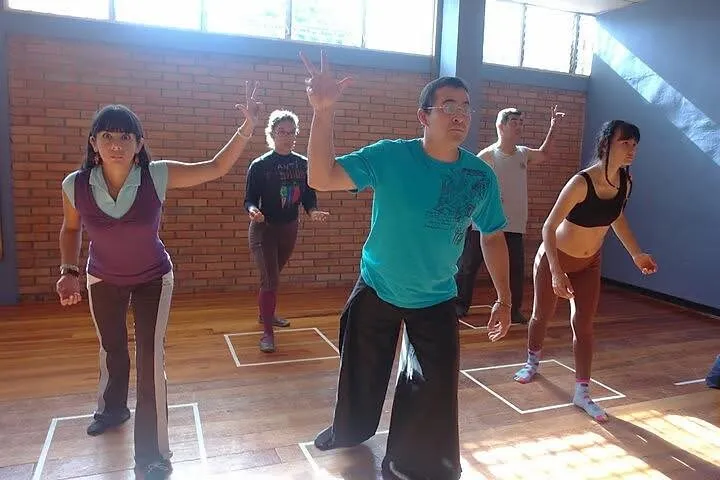
Training based on the concept of the extraordinary body of Odin Teatret (Eugenio Barba and Julia Varley), 2011–2015: concentrating energy in a small space of movement.
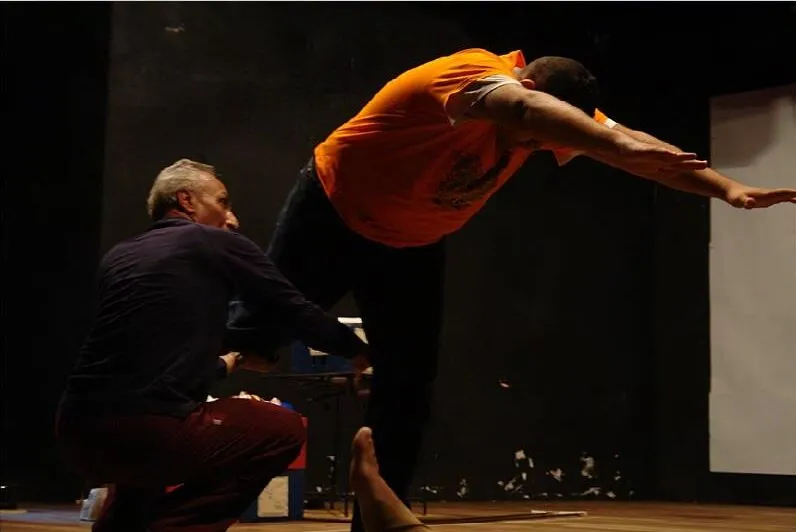
Training of contact and imprinting to teach the forces of opposition and to create body zones of energy concentration, 2007–2012.
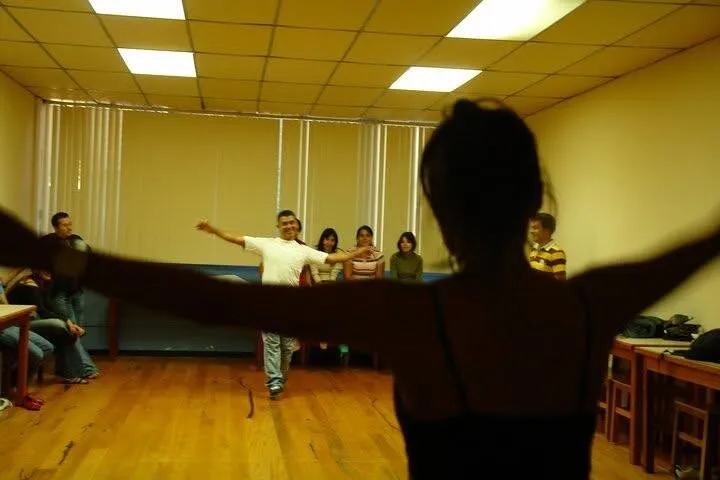
Exercise based on Peter Brook’s “Funambulist”, alongside the contact and imprinting training, 2007–2012.
Exercises on the double body and on energy shared through contact and flow, explored through puppets, Butoh, Meyerhold’s biomechanics, shadows and the “dance of the eyes”.
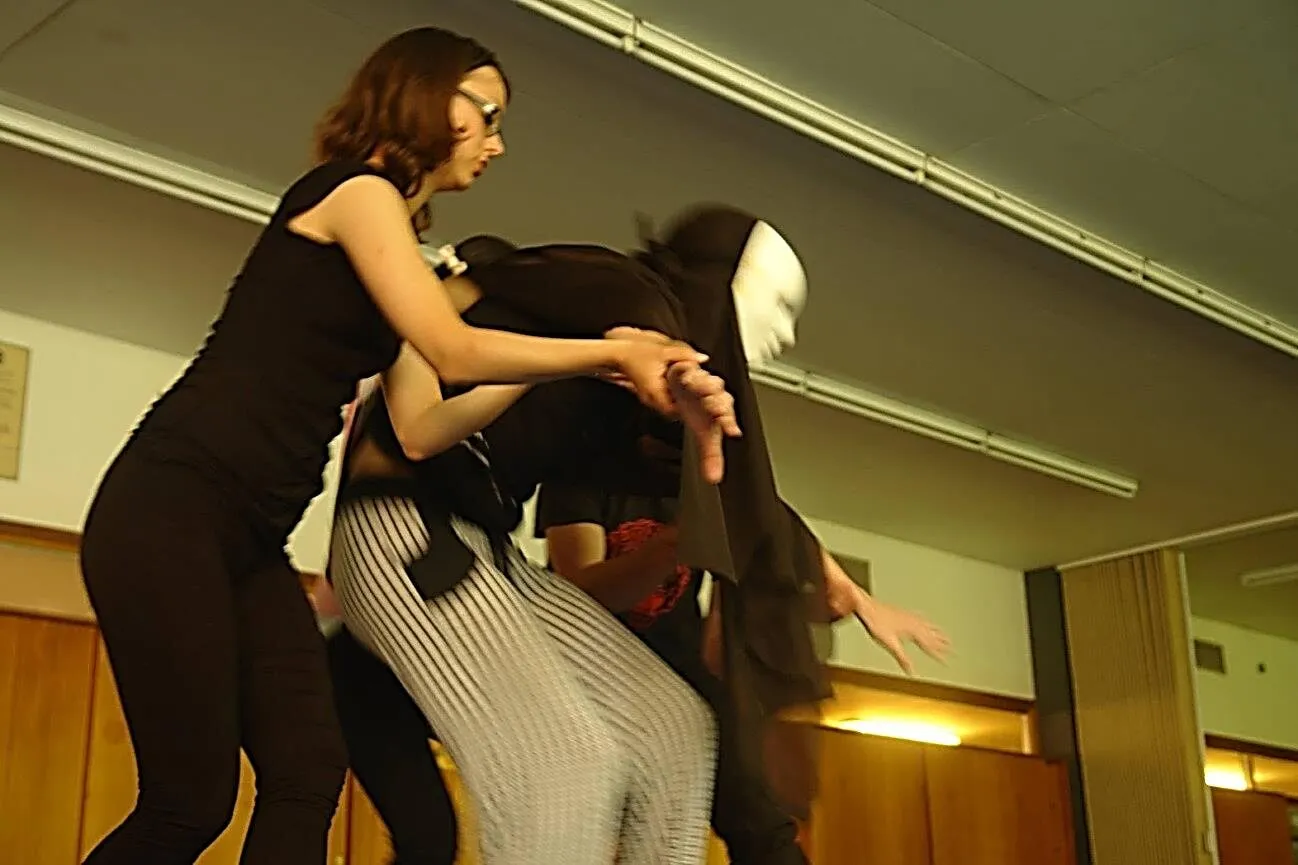
Belgium, 2011. Exercises on the Double Body and on energy shared through contact and flow, with Erasmus students of the Master in Arts Vivants, ULB Brussels. The concept of impulse draws in part on Thomas Richard’s technique of physical actions and on Barba’s dynamics of oppositions.
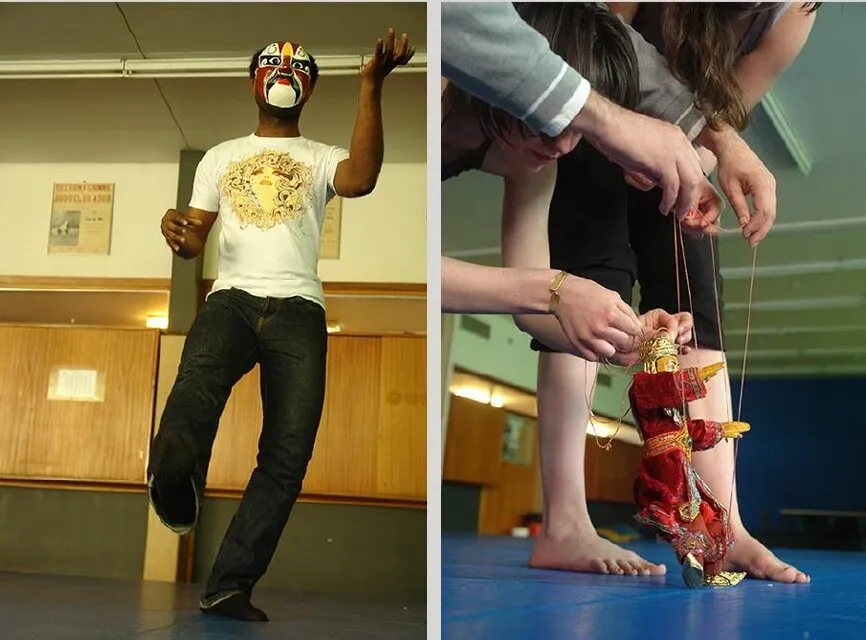
Training of the double and expanded body through Hindu and Balinese puppets, seen as embodied extensions of the acting body and endowed with the power of mutual teaching.
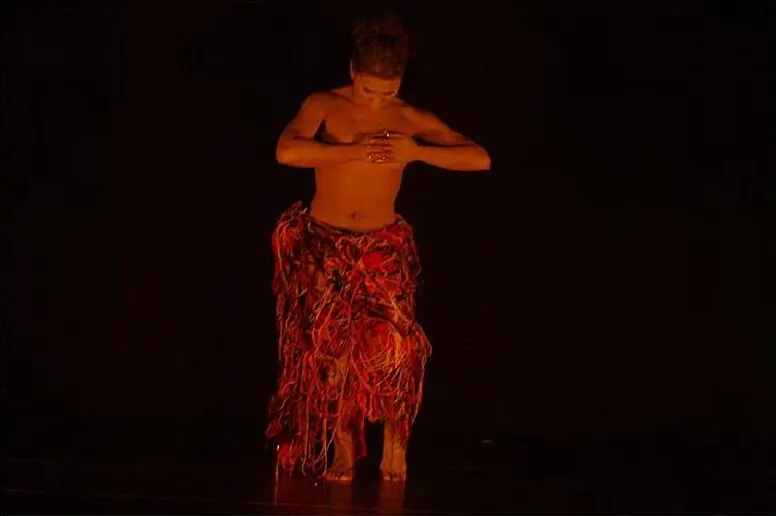
Dance-performance with Juliana Mendonça (LiquidDANCE). Butoh technique helped me study the construction of a bodily space and time wholly other than the chronology of actions in twentieth-century dramaturgy.
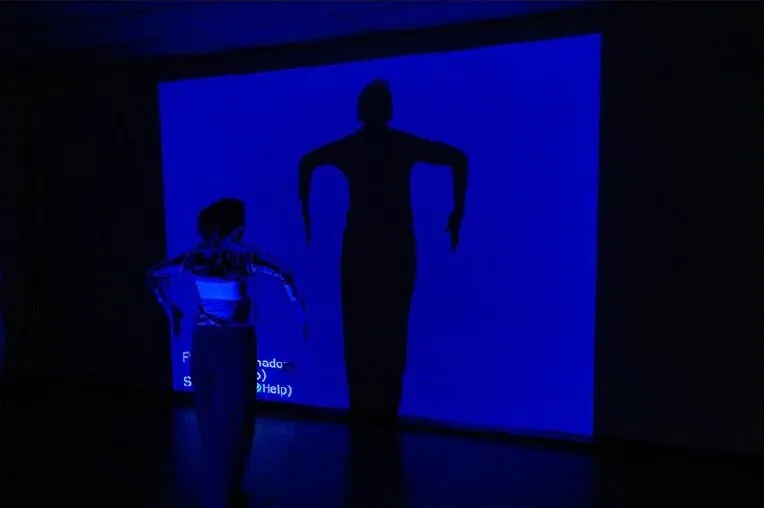
Practices and demonstrations based on Meyerhold’s Biomechanics (workshops 2008, 2009, 2010). Shadows are almost indispensable in my work: besides Meyerhold’s use of them for the otkaz effect, I add the self-observation of the microgesture and awareness of the permanent dialogue with that other body, which suggests further lines of flight.
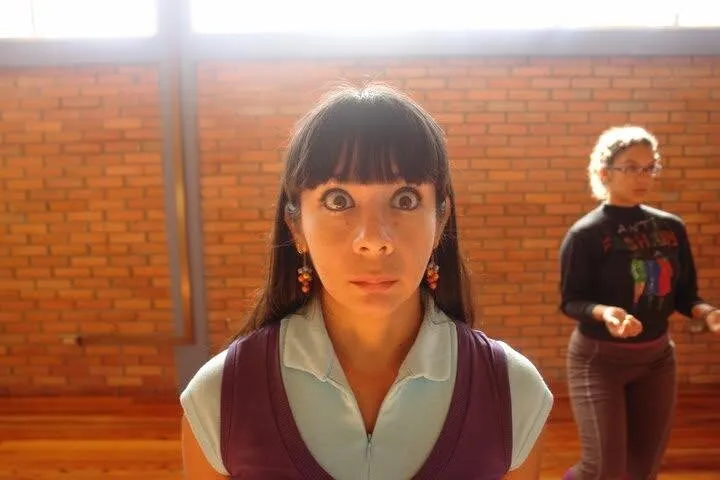
Training of the “dance of the eyes”, or technique of the “dilation of the gaze”, closely tied to the Balinese concept of seledet.
Performances conceived for specific places and gatherings, from the intercultural BORDES seminars between Colombia, Mexico and Venezuela to the national dance festival in Mérida and a dance-theatre seminar at UNAM in 2022.
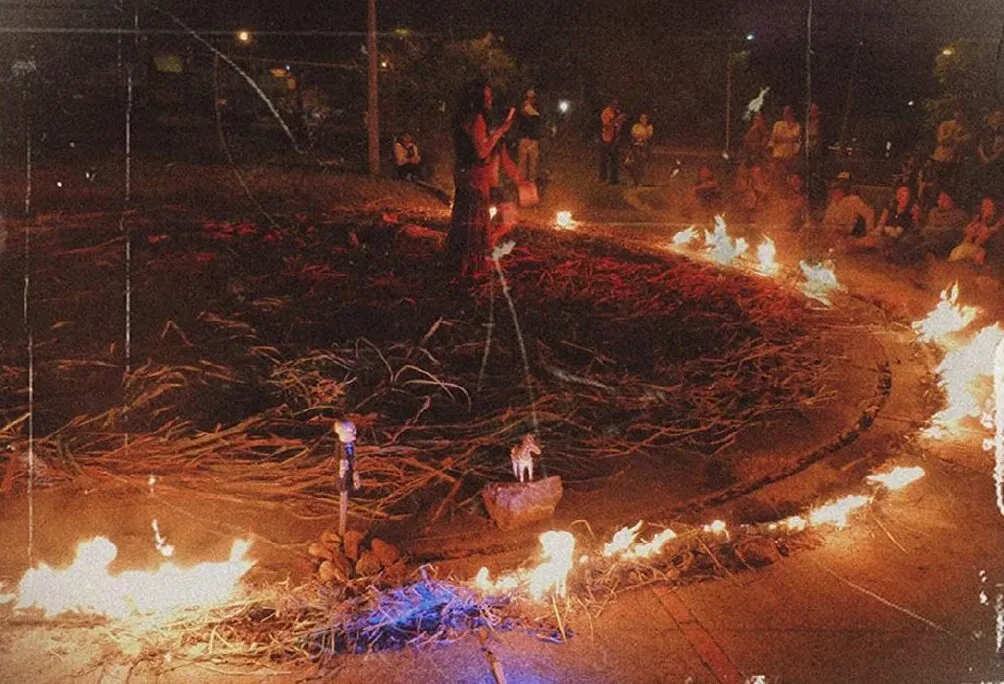
Circle of Fire, intercultural seminar BORDES, Colombia–Mexico–Venezuela, 2012.
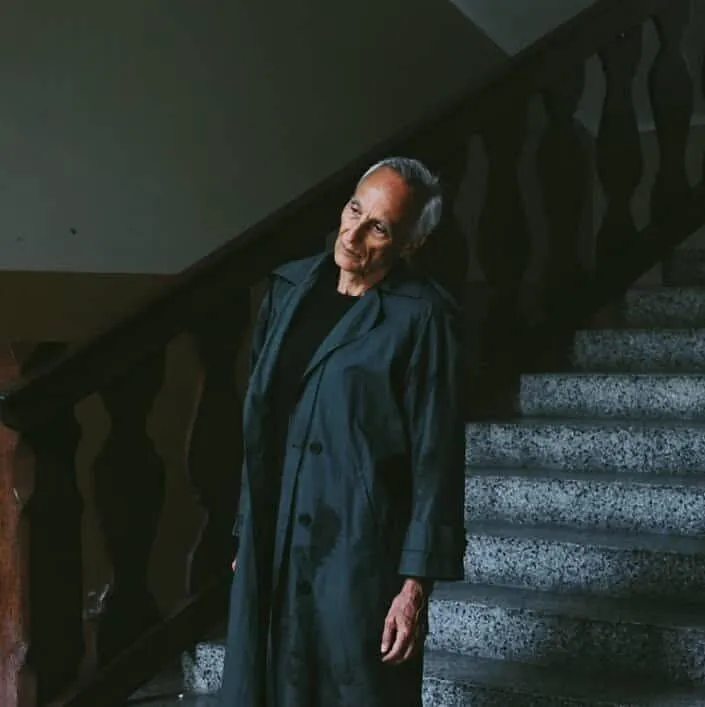
Ascenso/Descenso, site-specific performance: a bodily transposition of the song “Georgia on My Mind” (1930) by Hoagy Carmichael, lyrics by Stuart Gorrell. Dance-theatre seminar, UNAM, Mexico, 2022.
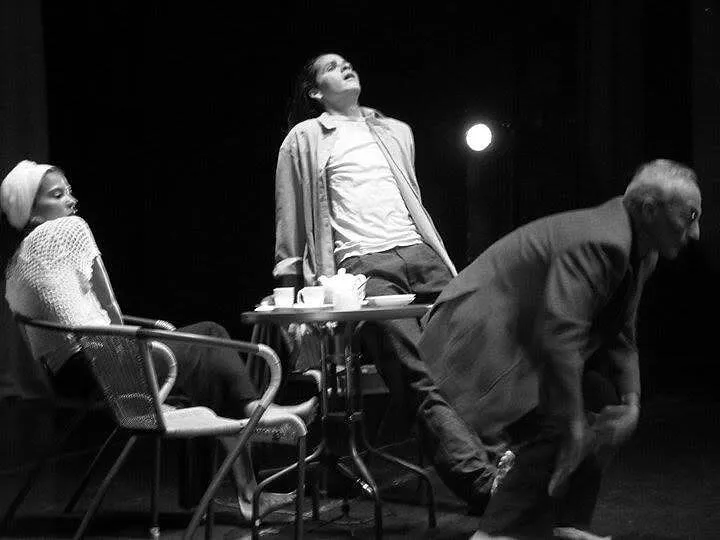
TARANTAcaffé, dance-theatre, National Dance Festival, Mérida, 2010. With Juliana Mendonça and Eric Urriola. An experiment on the ritual of the Taranta (Sicily).
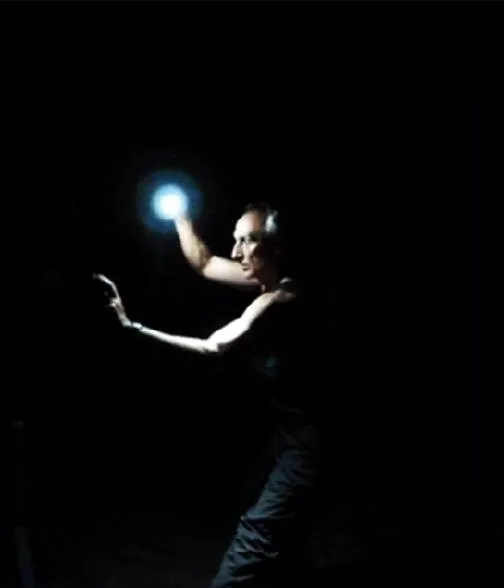
Fight&Clean, theatre-performance, intercultural seminar BORDES, Colombia–Venezuela, 2009.
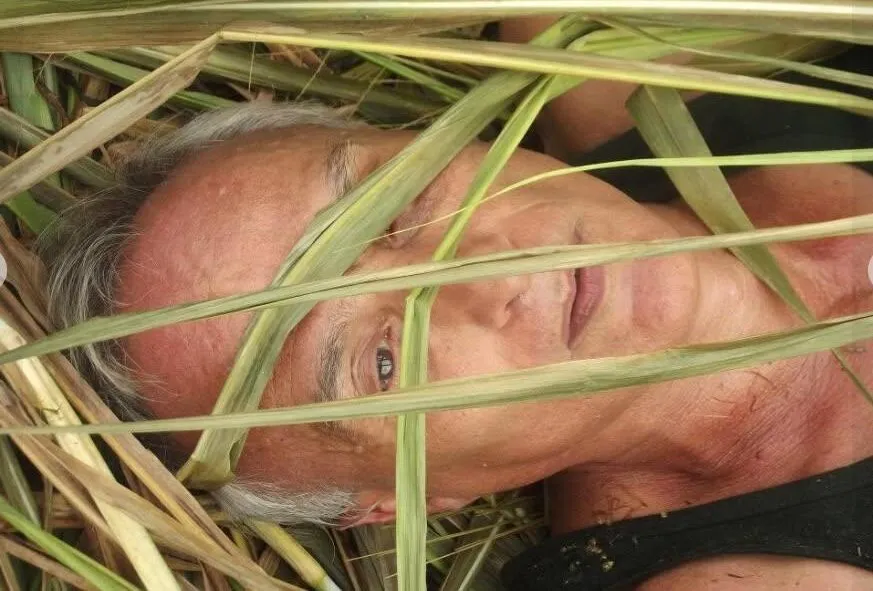
Circle of Fire, site-specific performance, intercultural symposium BORDES, Colombia–Venezuela, 2008.
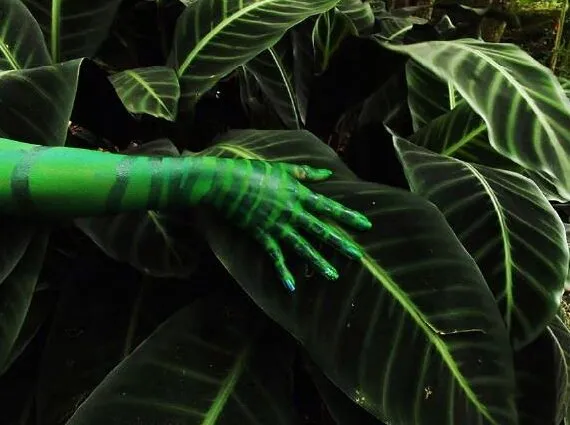
MIMETICSsomatics, body art workshop, International Congress of Semiotics, Nanjing University, China, 2008.
My most recent research focuses on atmosphere and environment, with particular attention to the acousmatic dimension of perception and of the generation of movement and action: what I first called ecoperformance and bioperformance.
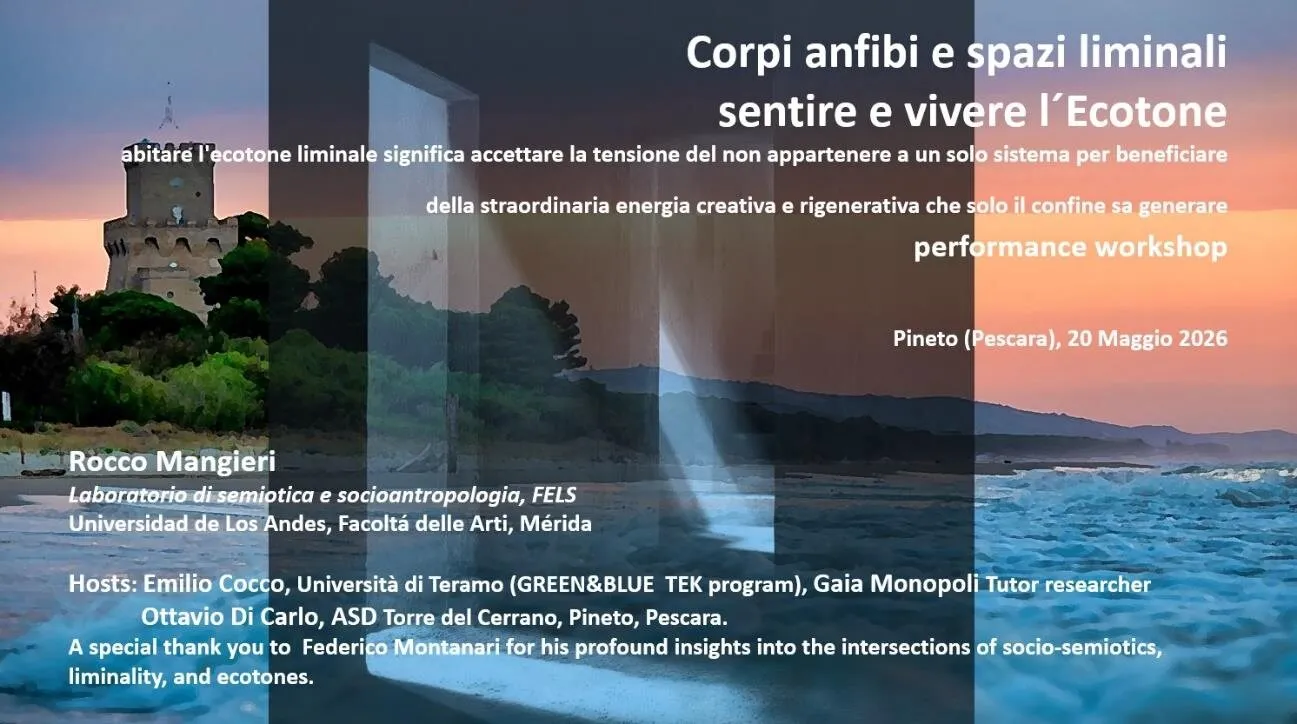
Recent workshop at Torre del Cerrano (Pescara), within the “Blue & Green TEK” programme, by invitation of Emilio Cocco (University of Teramo), 2026. The focus is the ecological concept of ECOTONE, the area of transition and exchange between land and sea, with groups of Erasmus Mundus students.
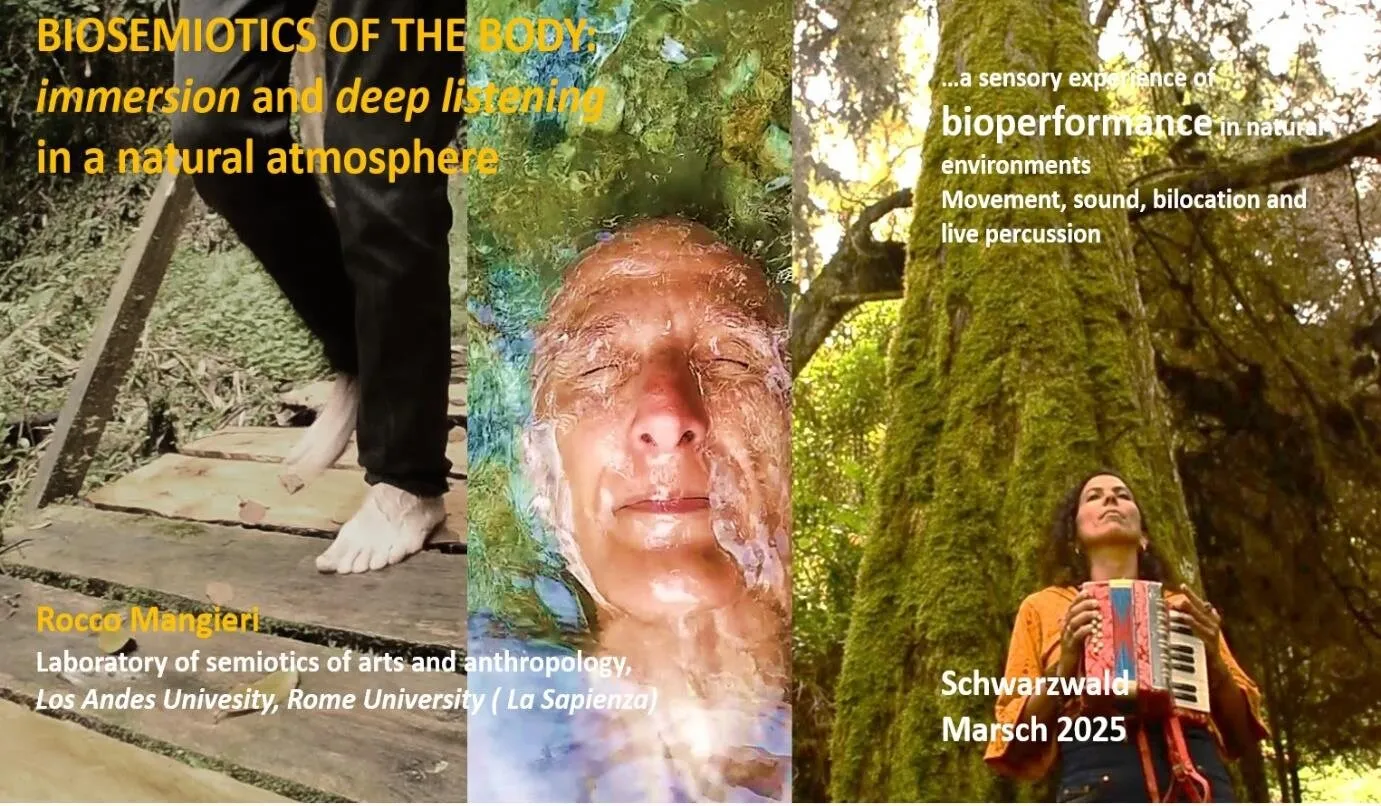
Poster of a bioperformance workshop on immersion and deep listening in a natural atmosphere, with movement, sound, bilocation and live percussion, Schwarzwald, March 2025.
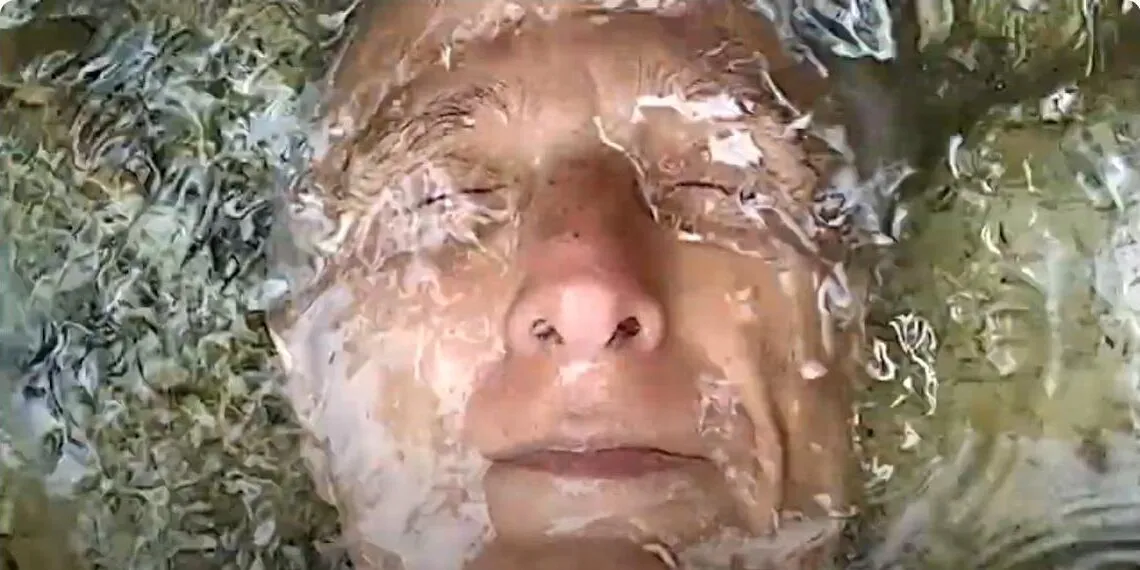
Still from the video “Escuchar el bosque: estados de flujo, escucha profunda e interacción” (Listening to the forest: states of flow, deep listening and interaction).
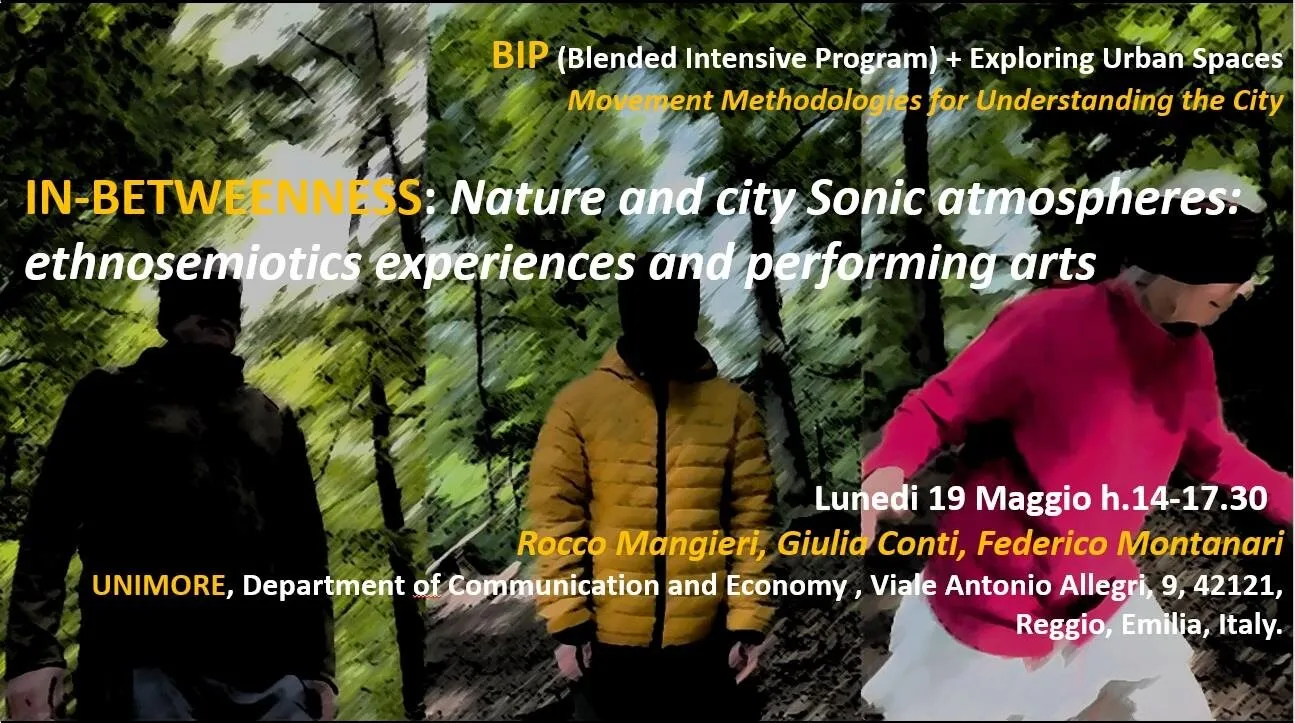
BIP (Blended Intensive Program) “Exploring Urban Spaces: Movement Methodologies for Understanding the City”. Session “In-betweenness: nature and city sonic atmospheres, ethnosemiotic experiences and performing arts”, with Rocco Mangieri, Giulio Conti and Federico Montanari, UNIMORE, Department of Communication and Economics, Reggio Emilia.
One of my most recent experimental laboratories, as visiting professor at Suor Orsola Benincasa University, explored the relation between digital memories (still algorithmic) and the memories of the body (deeply analogue, embodied in a phenomenological sense). A first experimental product is a video-performance born of an ethnographic exploration of the Quartieri Spagnoli in Naples through Sensory Ethnography, 2026.
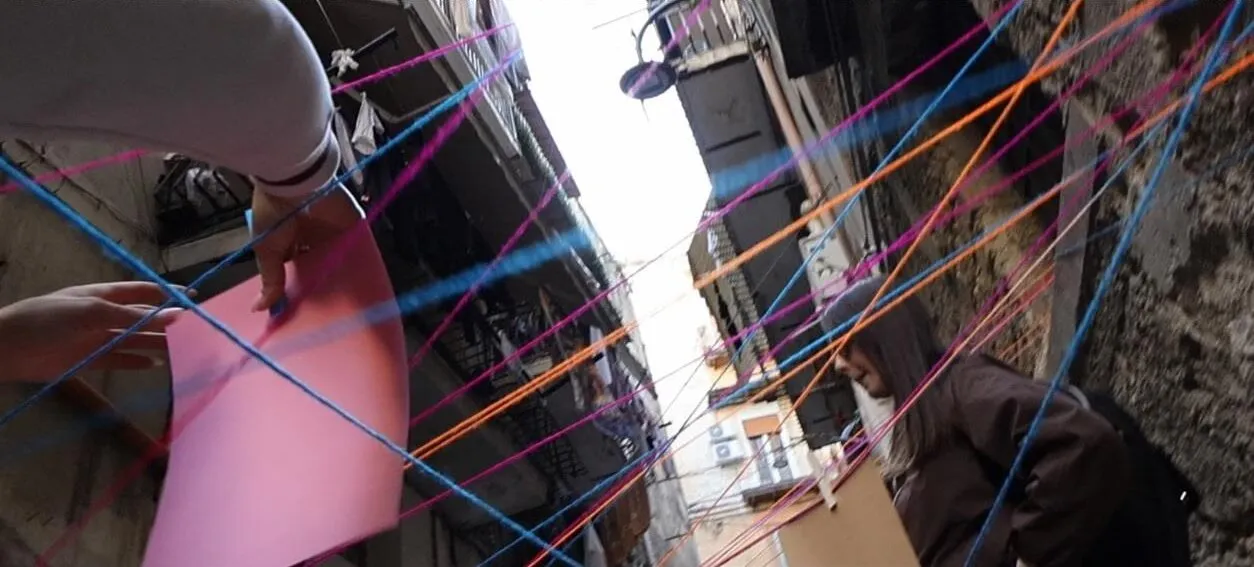
Sequence from the process of the video-performance created from an ethnographic exploration of the Quartieri Spagnoli of Naples through the method of Sensory Ethnography, 2026.
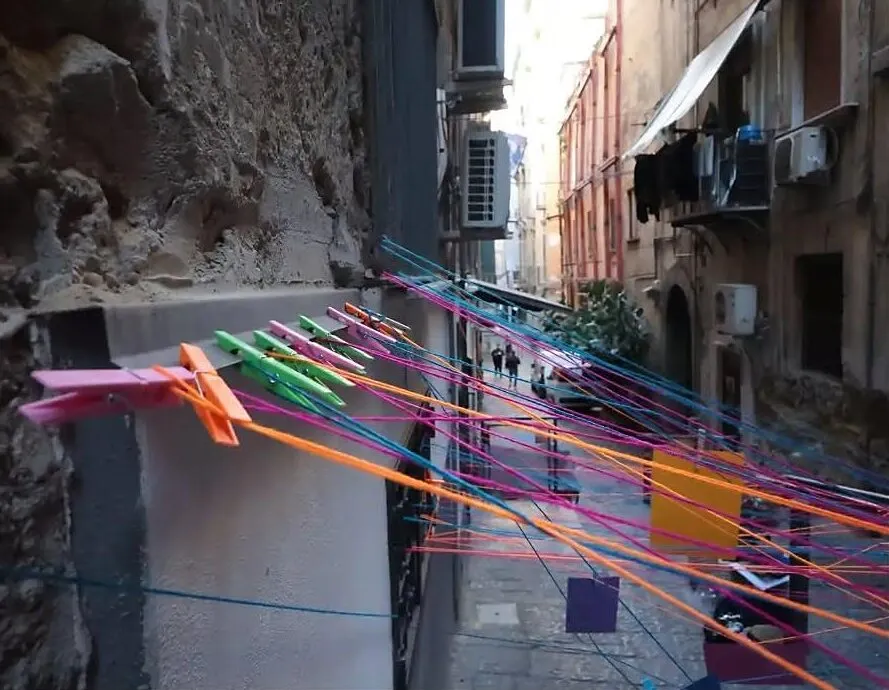
Another sequence from the process: coloured threads fixed with clothespins to a wall and stretched across a street of the Quartieri Spagnoli, 2026.
Between 2022 and 2026, research on POLYRHYTHM as the theoretical axis of Caribbean cultural expressions; in 2025, field research in Rome on the rhythms of the city, with walking as its spatio-temporal unit.
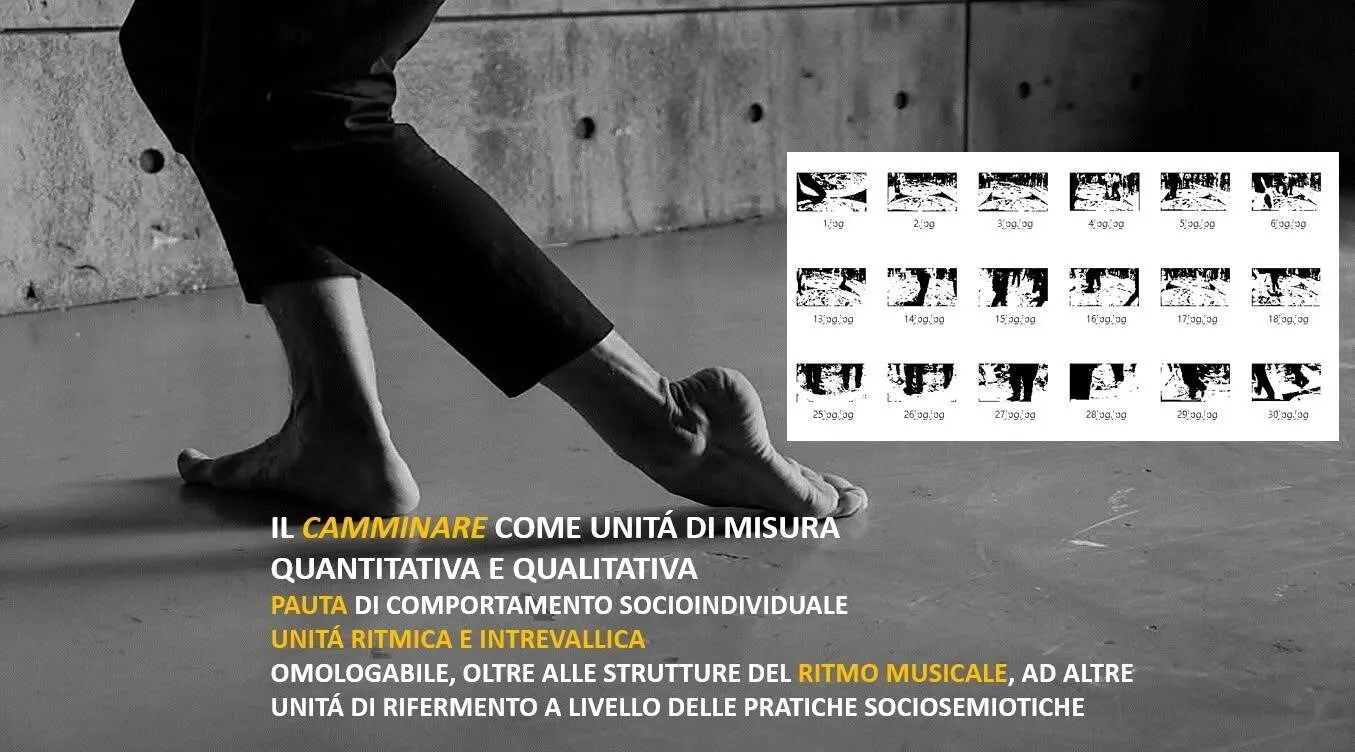
Field research in Rome, 2025, as visiting researcher at the Department of Sociology of Communication, Sapienza: walking (Michel de Certeau’s primordial walking) as the spatio-temporal unit shared by researcher and field of study. Slide from the research.
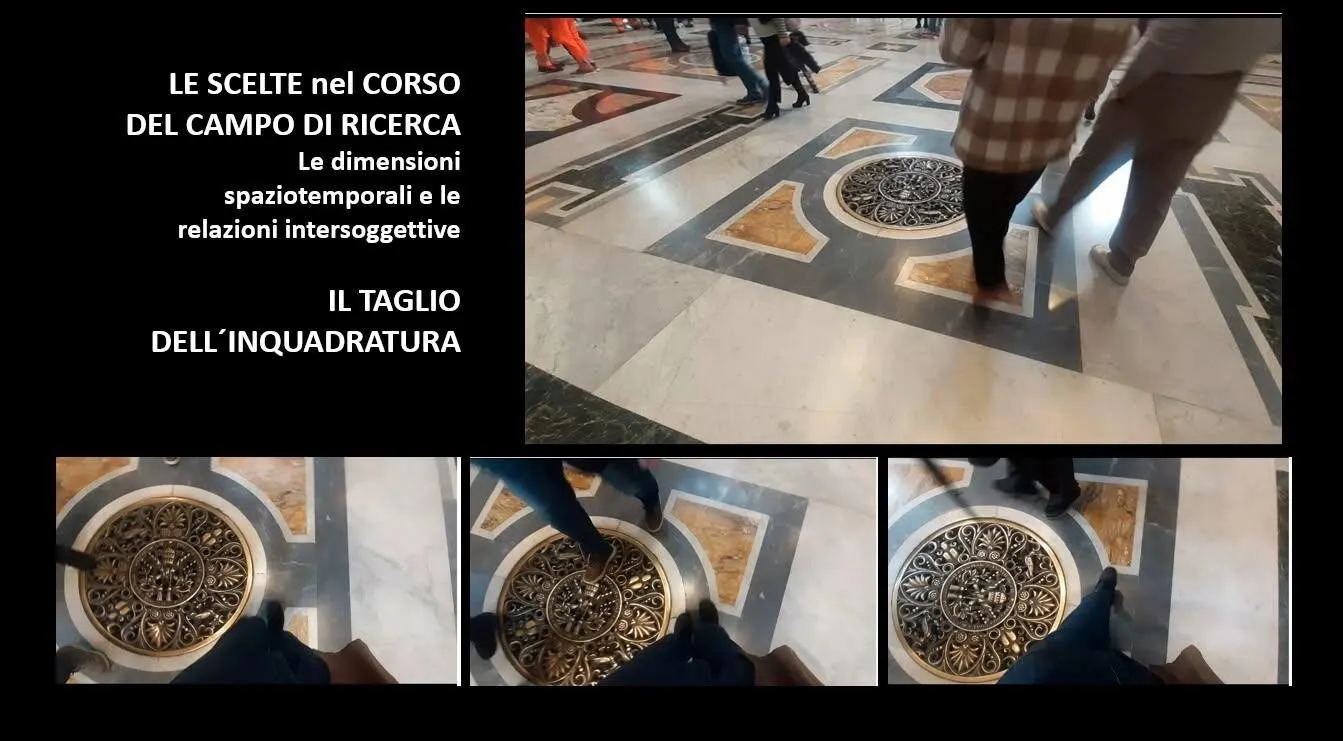
Field research in Rome, 2025: the choices made in the course of the fieldwork, from its spatio-temporal dimensions and intersubjective relations to the framing of the shot.
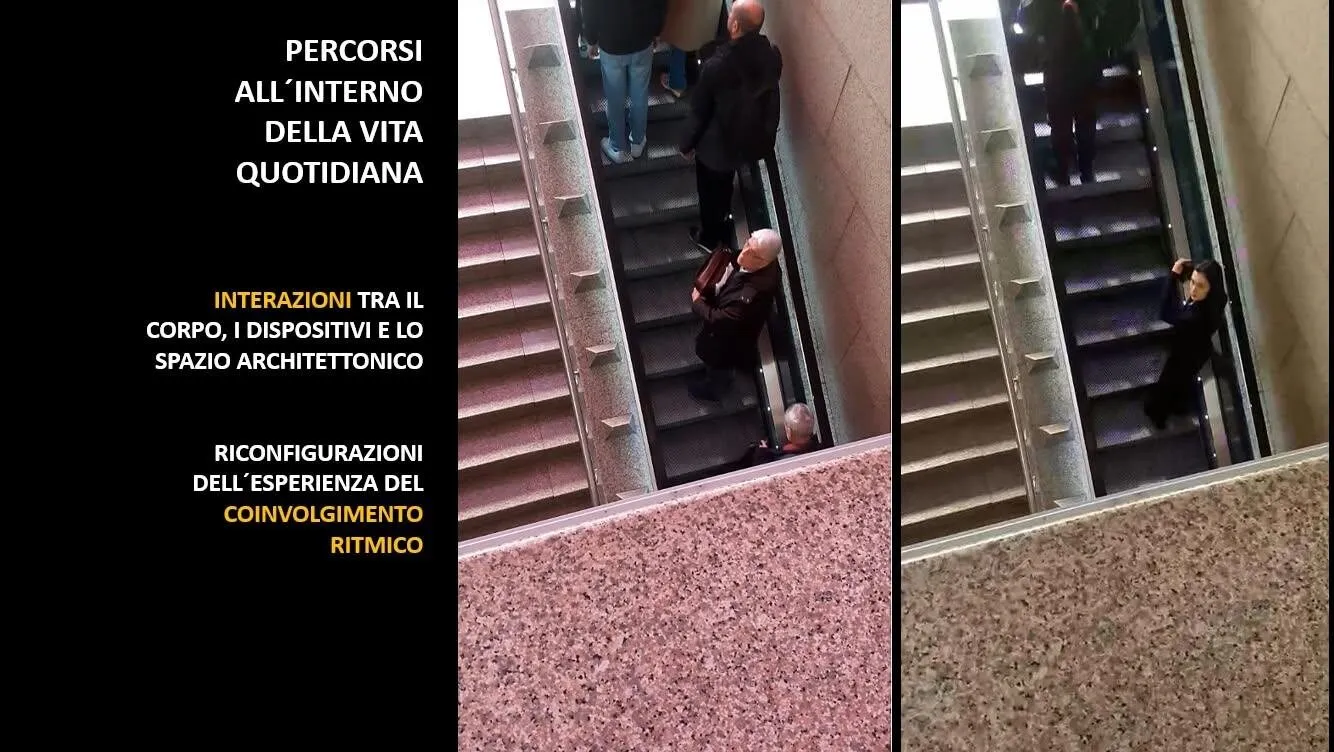
Field research in Rome, 2025: paths within everyday life, interactions between the body, devices and architectural space, and reconfigurations of the experience of rhythmic involvement.
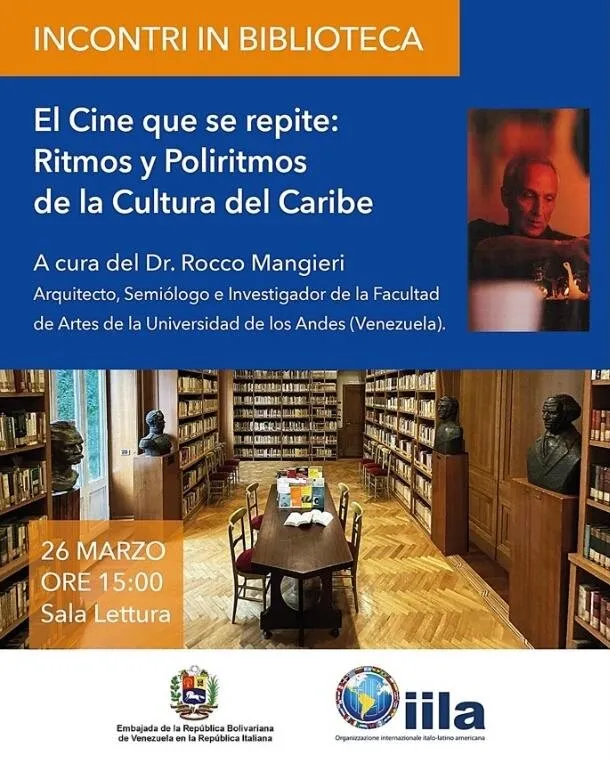
Poster of a library meeting, “El cine que se repite: Ritmos y poliritmos de la cultura del Caribe”, curated by Rocco Mangieri, within the research on polyrhythm as the articulating axis of Caribbean cultural expressions.
Lighting design and stage setting for productions of the School of Performing Arts, events that give visibility to my students’ research and my own, and the project for a BA in Dance and Movement Arts at the University of Los Andes.
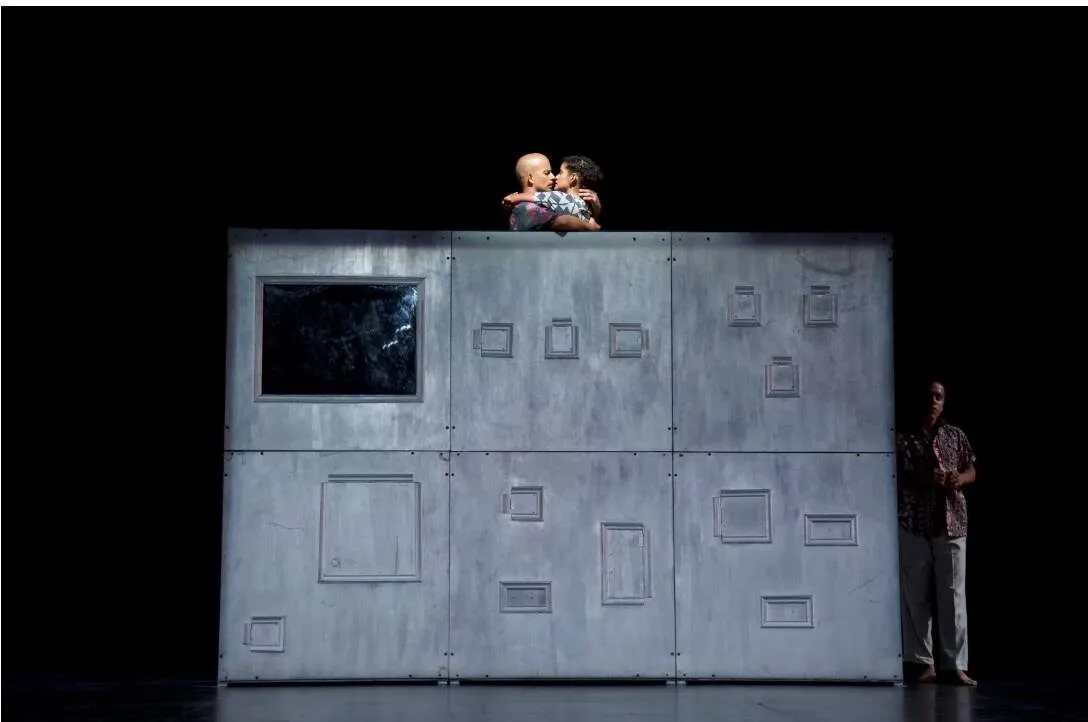
Lighting design and stage setting for ANDROGINOS by Gabriel Torres (2008–2010–2014), School of Performing Arts, ULA.
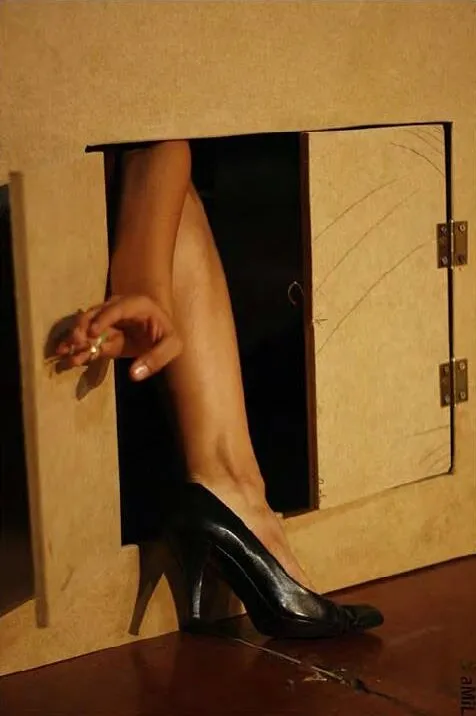
ANDROGINOS by Gabriel Torres: detail of the stage device, with lighting and set design by Rocco Mangieri.
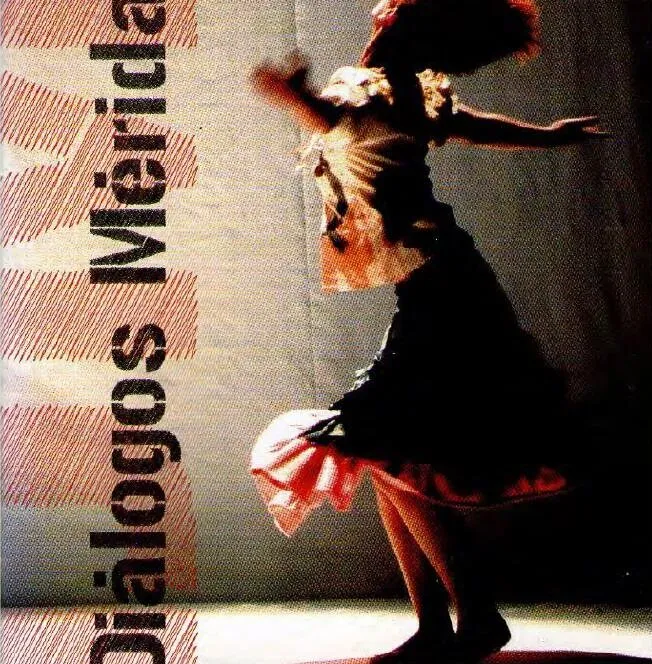
“Diálogos” and “Festival del Movimiento”: two of the events where I give visibility to my students’ research and my own, 2006–2015. Pictured: Diálogos Mérida, Latin American meeting of contemporary dance creators, 2006.
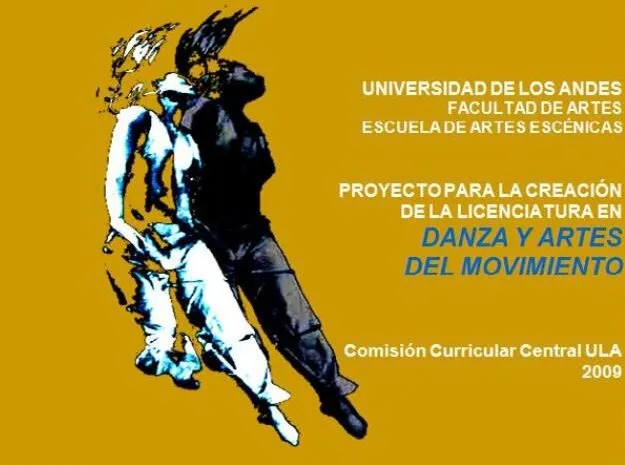
Project for establishing the BA in Dance and Movement Arts (promoter and coordinator, 2006–2010), now active in synergy with the schools of visual arts and music. The curriculum articulates dance, music, theatre and audiovisual arts around a continuous axis, the “Laboratory of intermedial practices”. Evaluated internationally and approved in 2010.
Two collaborative projects on identity and the confined body: Genderfull (2021), which uses dance and movement art against discrimination, social violence and inequality, and Cuerpos en riesgo, which explores creation from the body confined during the global pandemic.
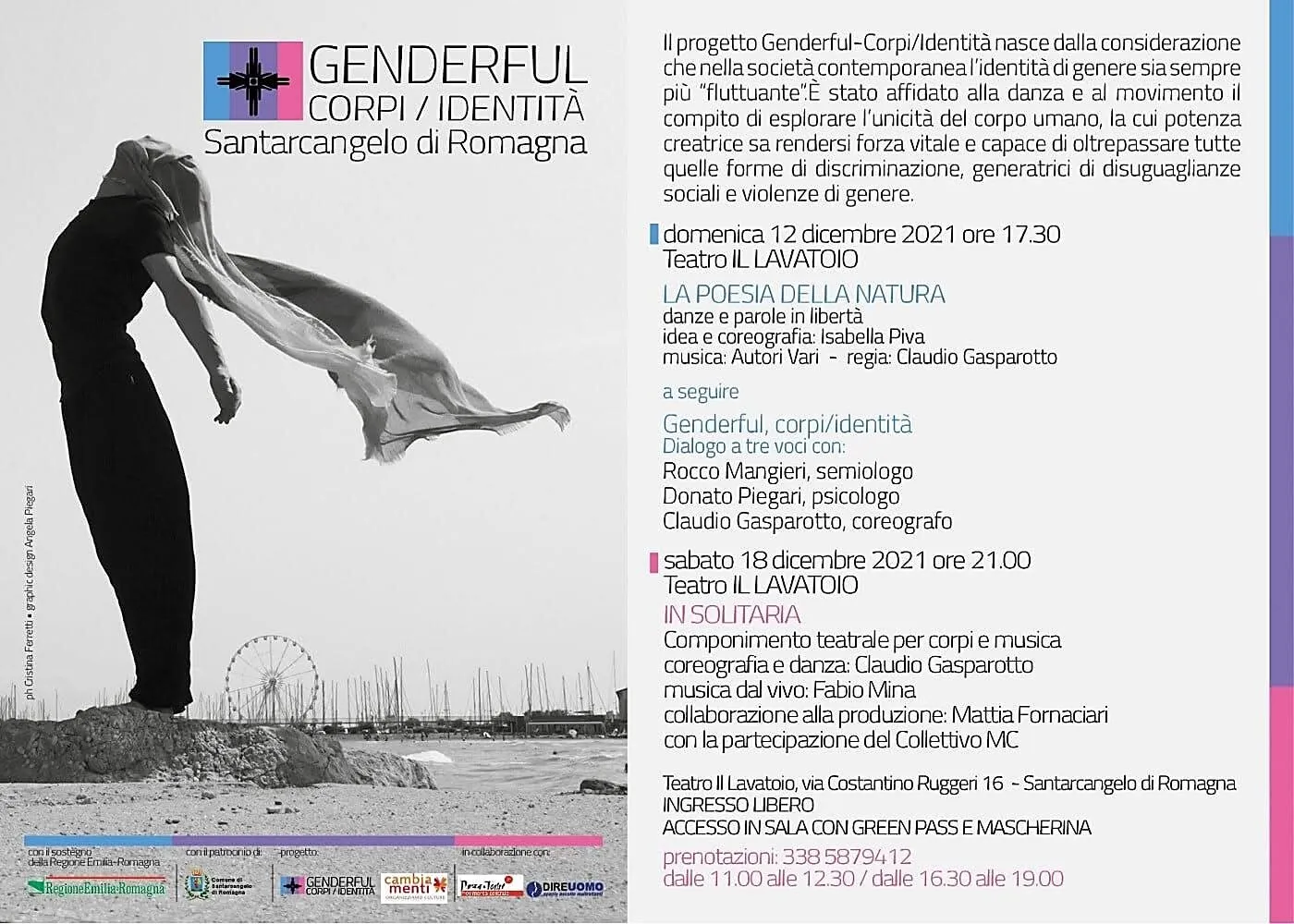
GENDERFULL, bodies-identities, Collettivo MC, Danza Teatro Movimento Centrale, 2021. A project developed progressively from this initial phase, based on the practice of dance and movement art as an effective tool against current forms of discrimination, social violence and inequality.
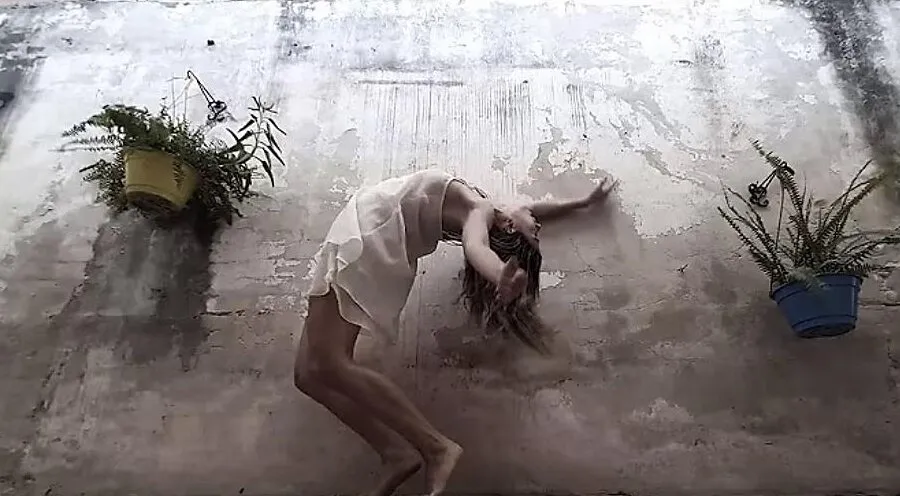
“Cuerpos en riesgo” (Bodies at risk), a transdisciplinary project with MovimentoCentrale.org, the Laboratory of Semiotics and Socioanthropology of the University of the Andes, the Italian Cultural Institutes of Córdoba and Buenos Aires and the Teatro Libertador of Buenos Aires. Its generating core is the possibility of creating from the body confined during the global pandemic.
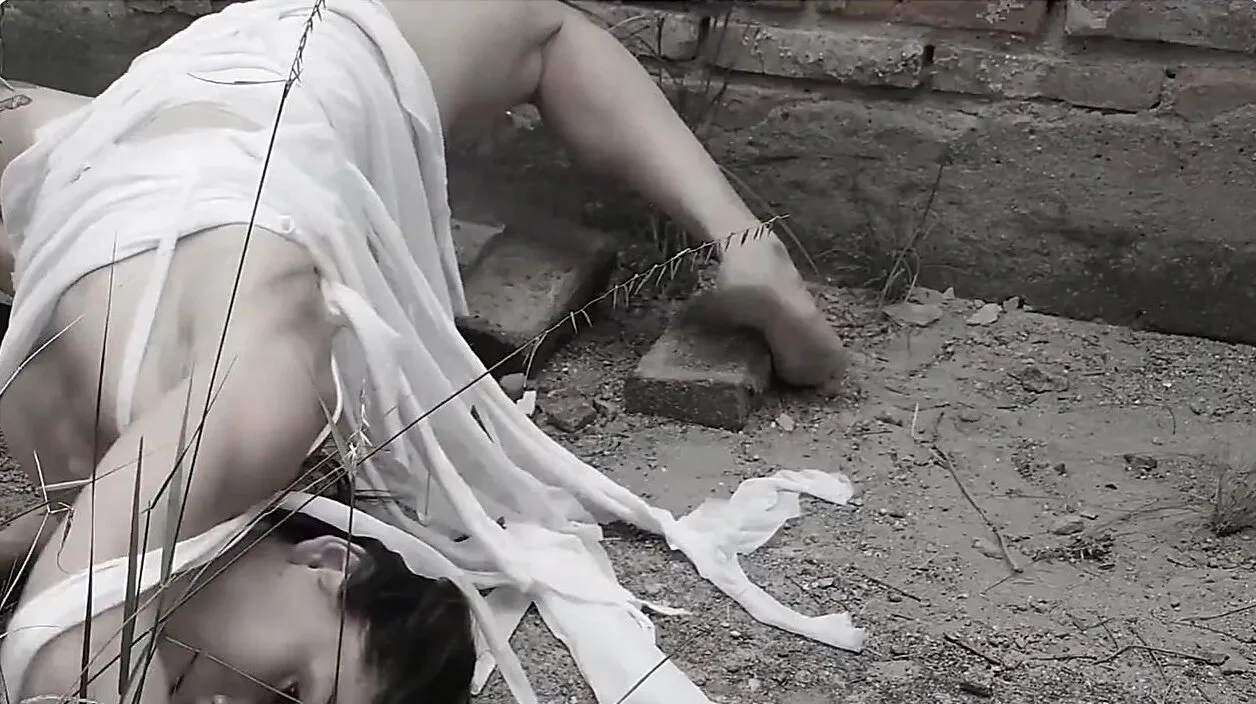
Still from one of the video creations of the project, which involved groups of musicians, theatre actors and dance students from several Latin American countries.
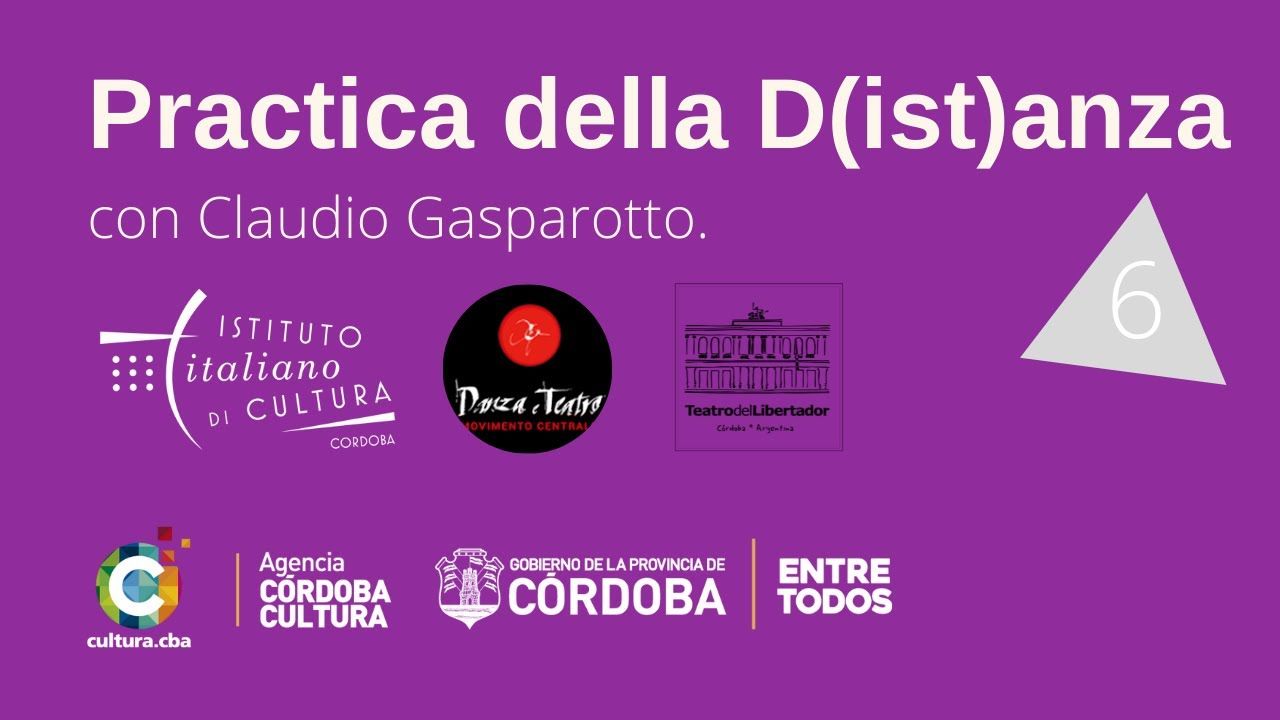
A project with MovimentoCentrale.org, the Laboratory of Semiotics and Socioanthropology of the University of the Andes and the Italian Cultural Institute of Córdoba (Argentina), drawing on the theories of Laban and Gillian Hobart and on virtual, interactive, distance communication. The first edition took place in 2020; a second is under way.
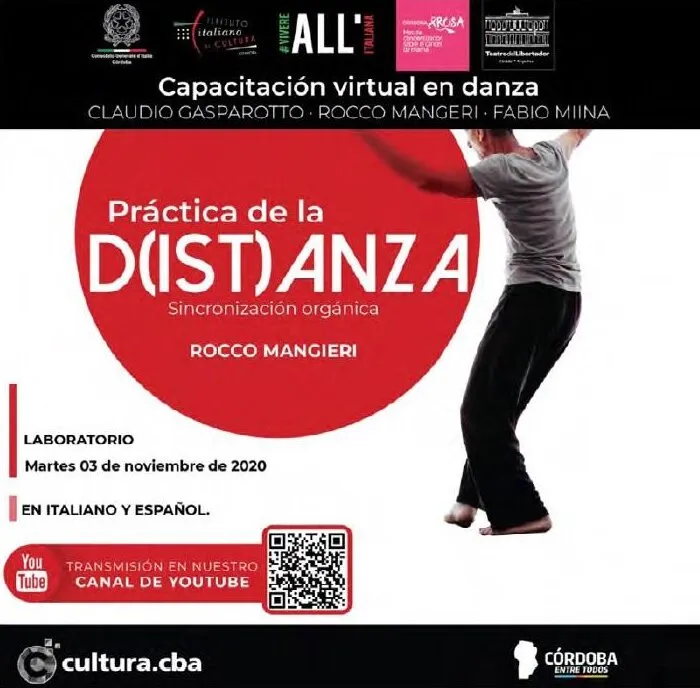
Poster of the virtual dance laboratory “Práctica de la D(ist)anza – Sincronización orgánica”, 3 November 2020, in Italian and Spanish, with Claudio Gasparotto, Rocco Mangieri and Fabio Mina.
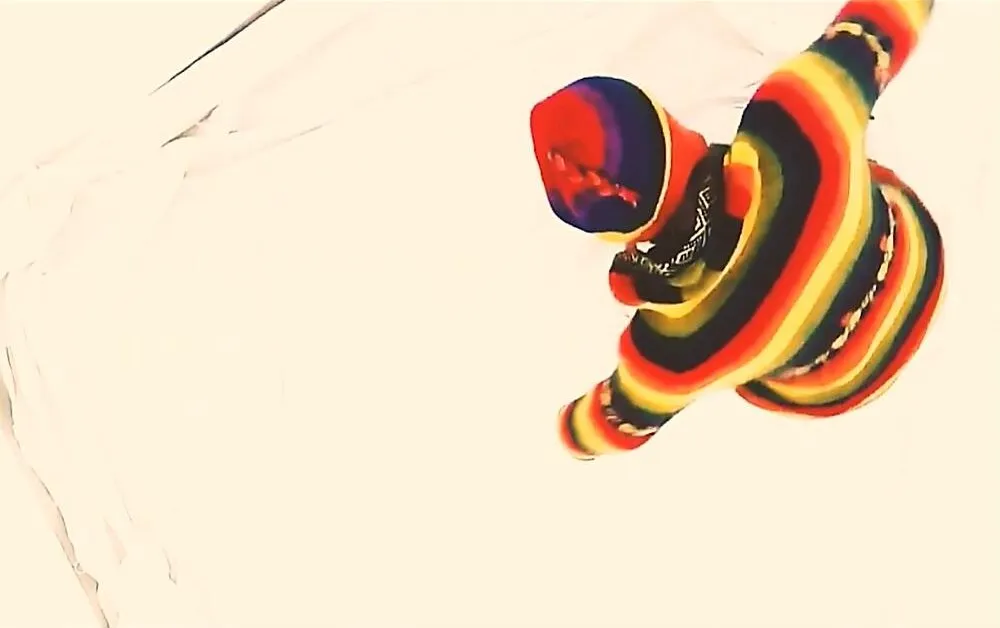
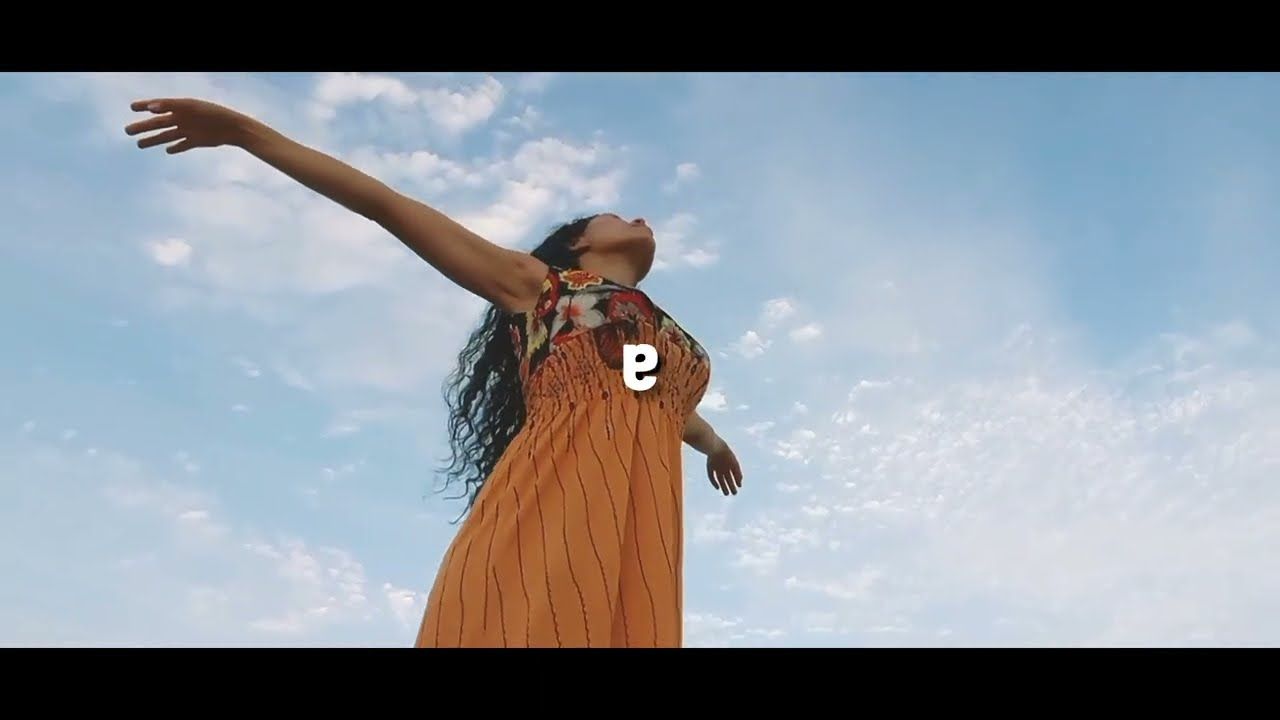
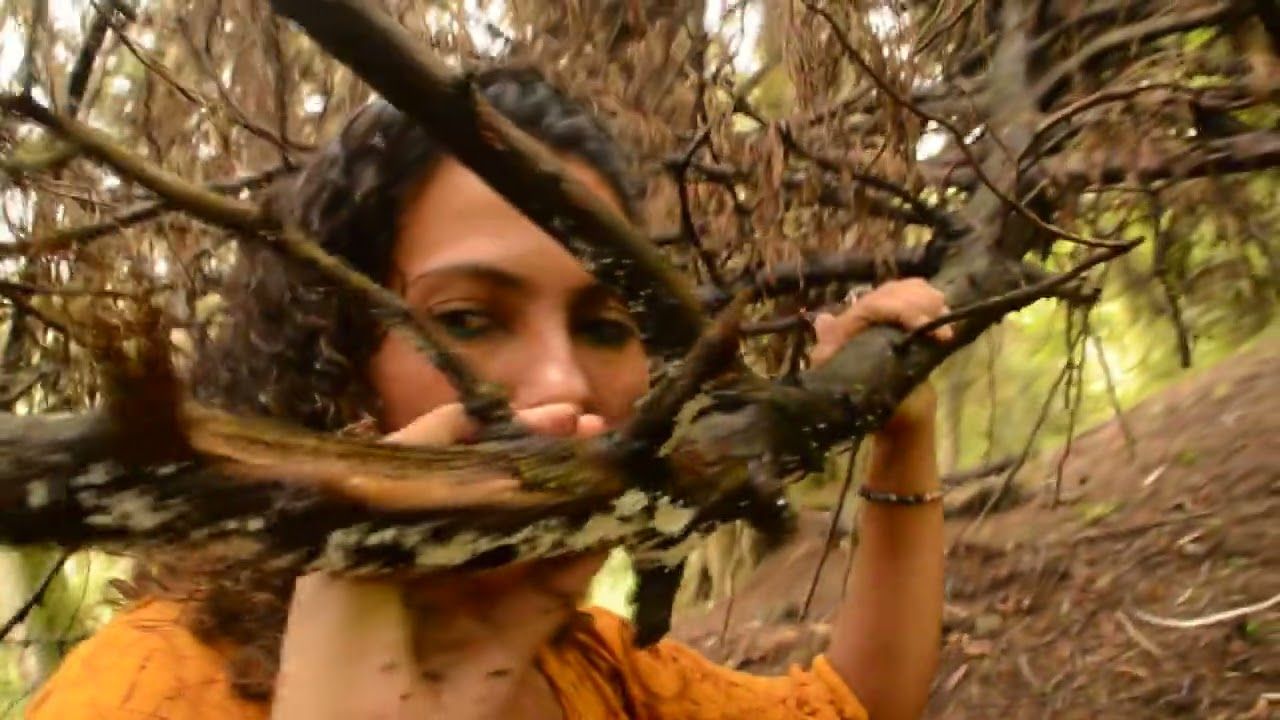
Still from “DUE MA NON DUE”, the collective videodance that closed the first edition (2020): choreography by Claudio Gasparotto, music by Fabio Mina, editing by Dorin Mihai.
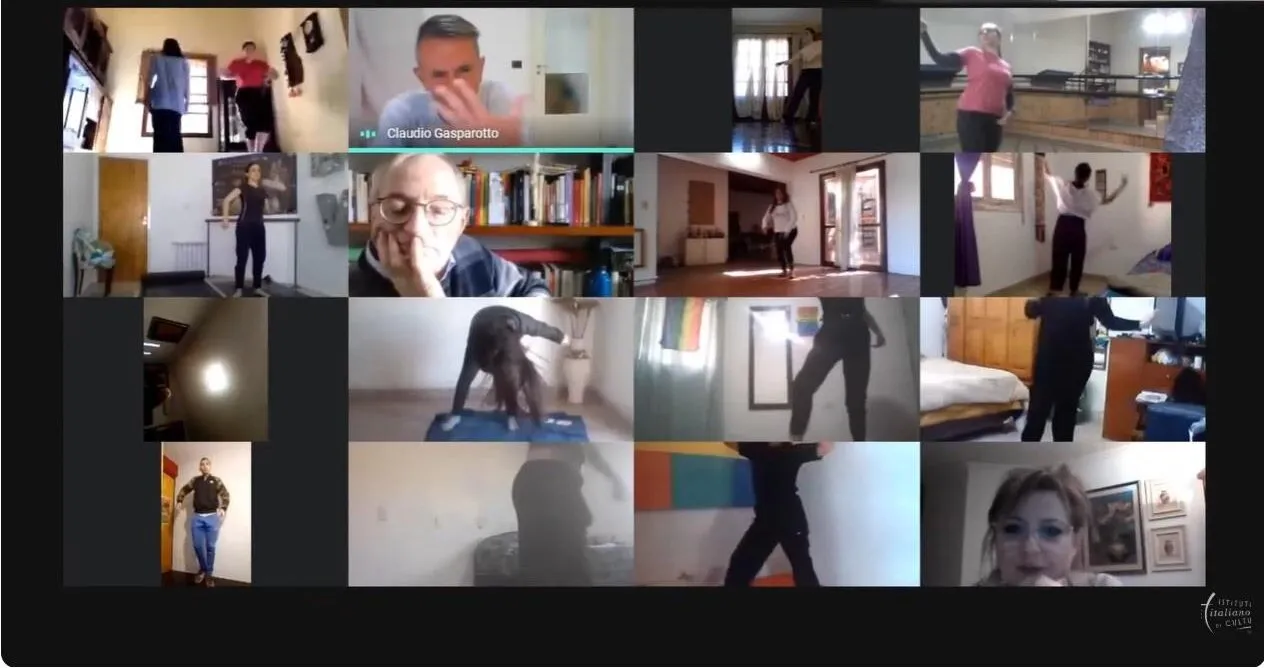
Screenshot of an online session of the project: practice carried out through virtual, interactive, distance communication.
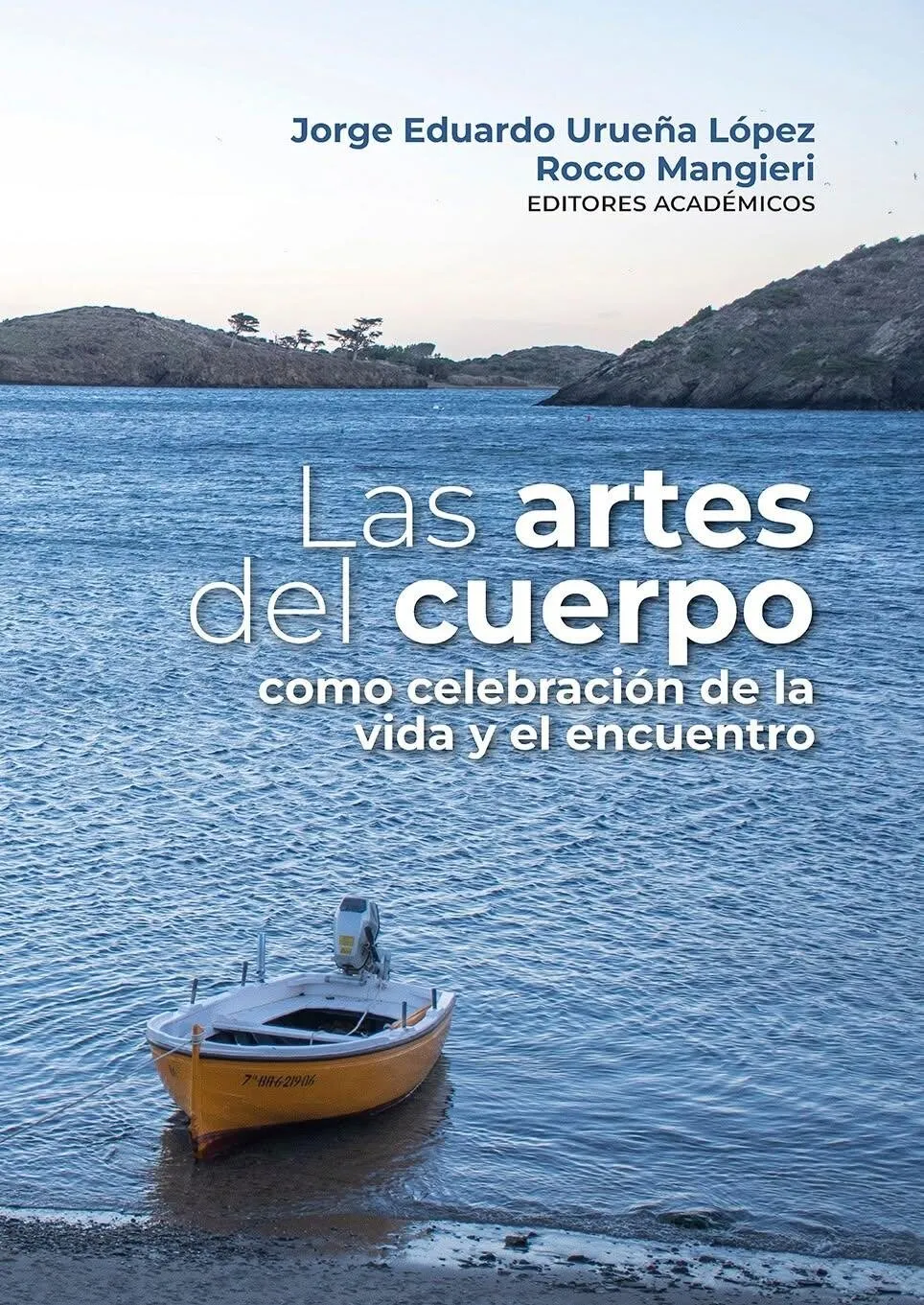
Edited by Jorge Eduardo Urueña López and Rocco Mangieri. A volume co-edited between Venezuela and Colombia gathering the contributions of the participants in a round table held in 2022 in Thessaloniki (Greece), at the International Congress of the International Association for Semiotic Studies. Published in 2023.
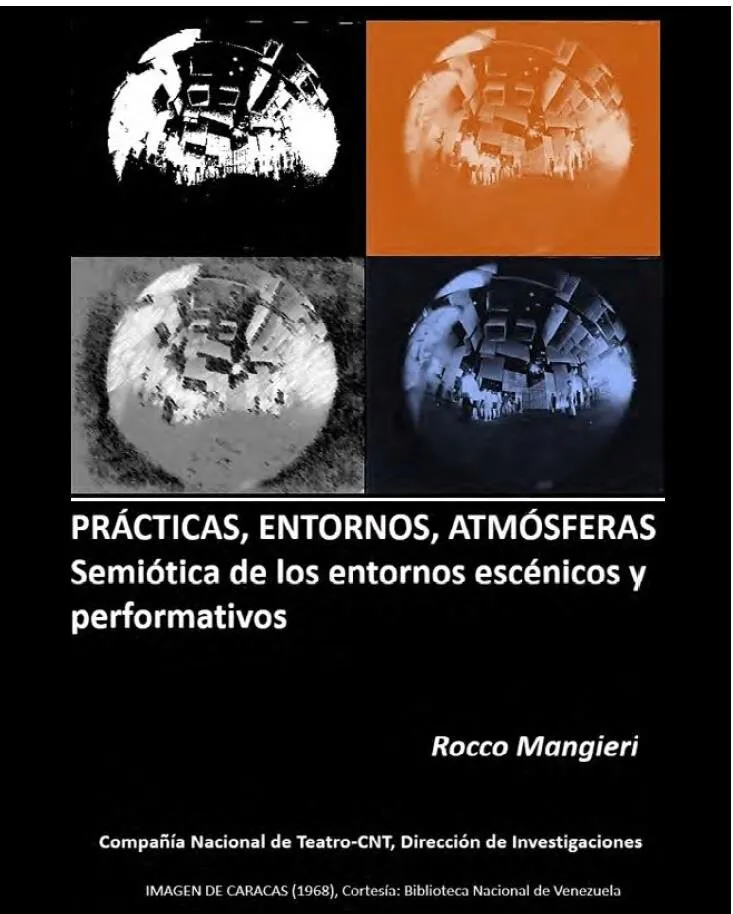
A recently published book in Latin American Spanish that gathers much of my theoretical and research nuclei from 1995 to the present. Published by the Compañía Nacional de Teatro (CNT), Dirección de Investigaciones.